
Last updated November 21, 2026
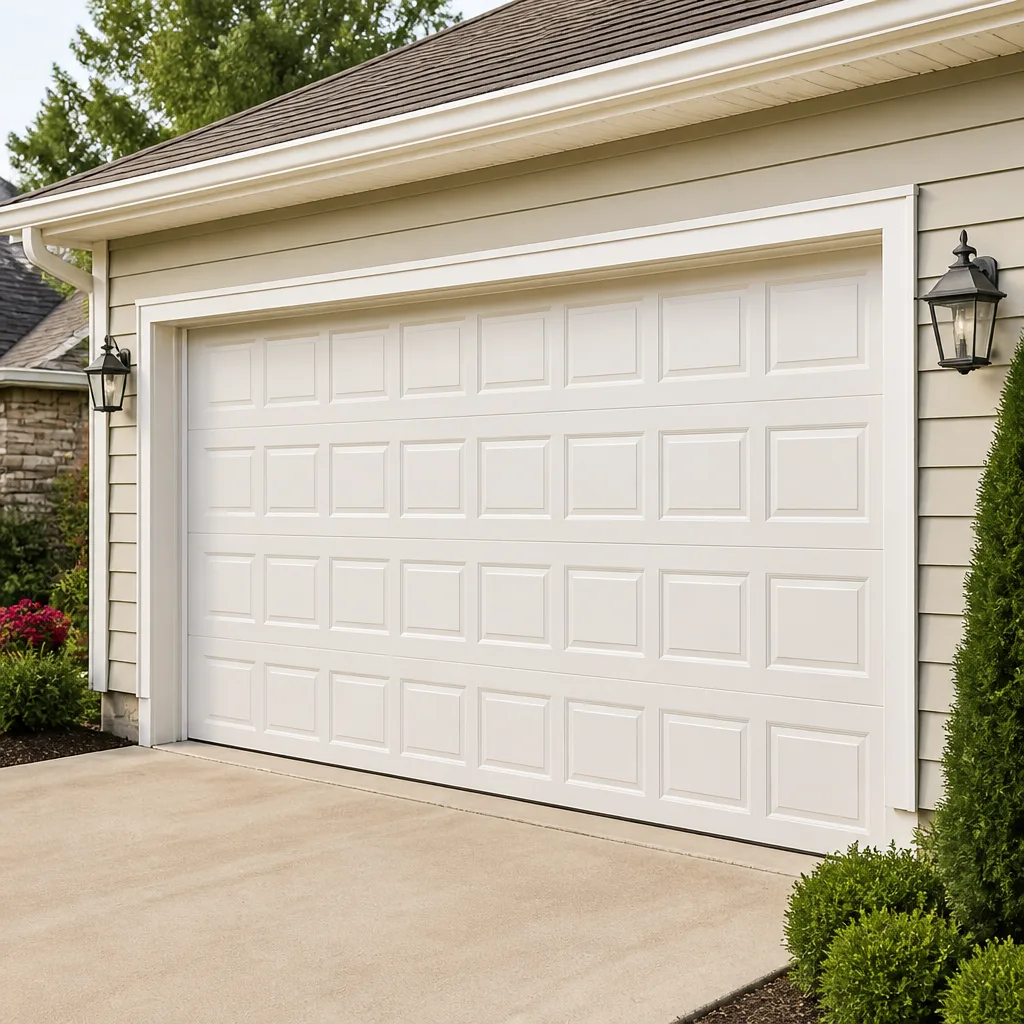 Raised-panel steel
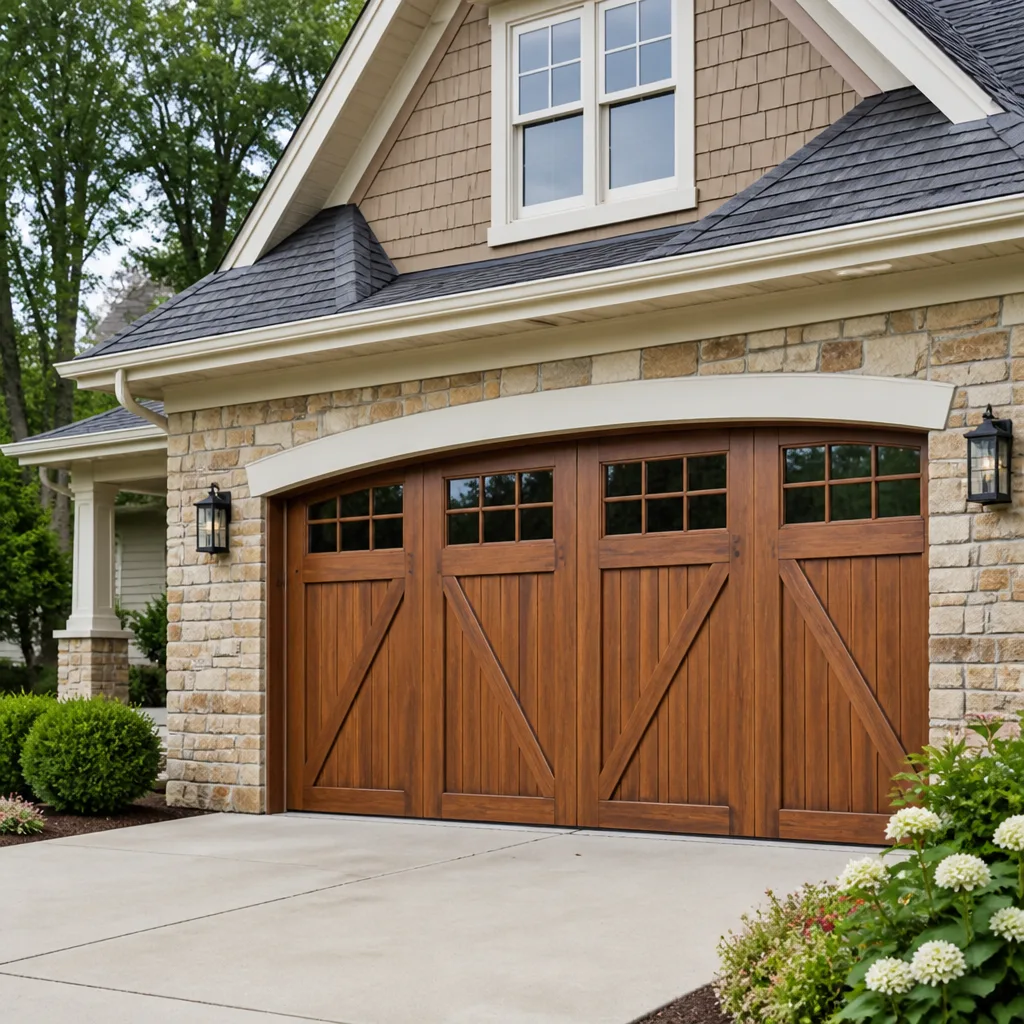 Carriage house
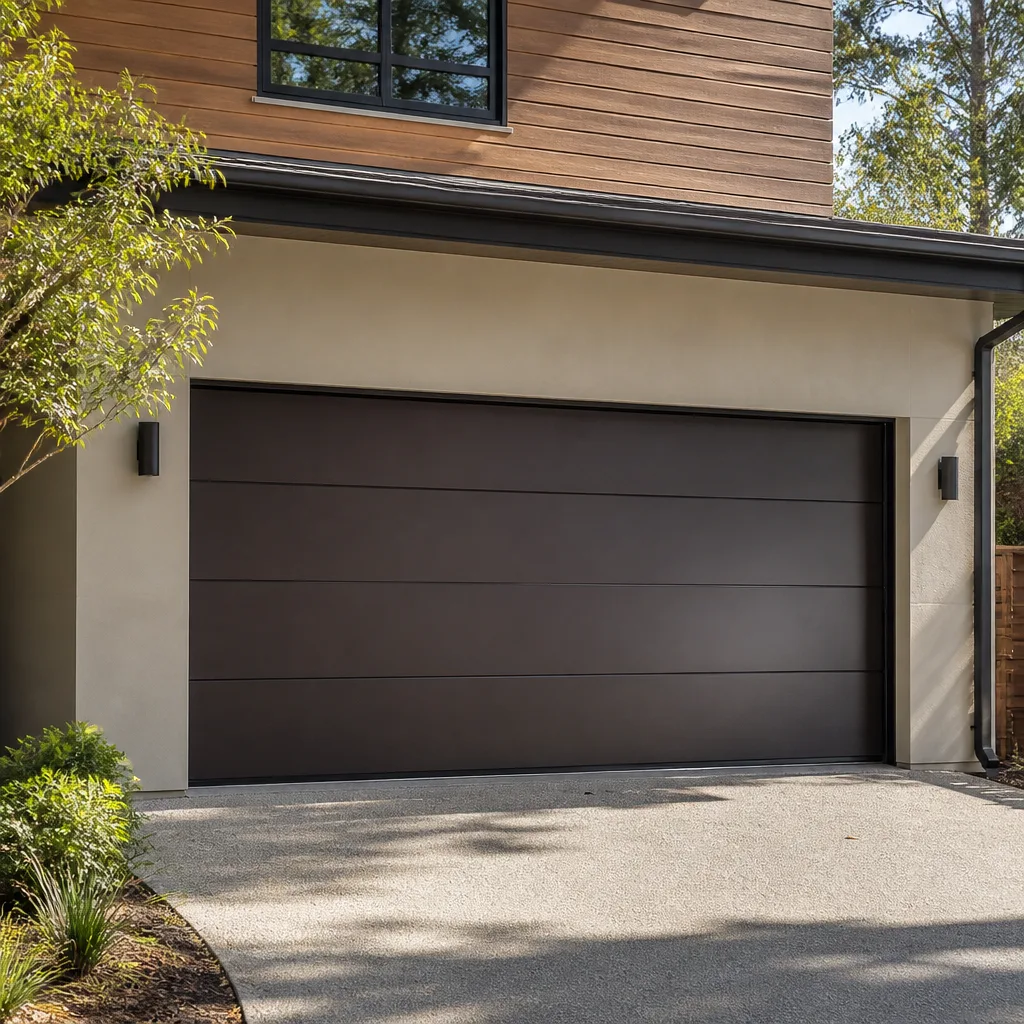 Modern flush
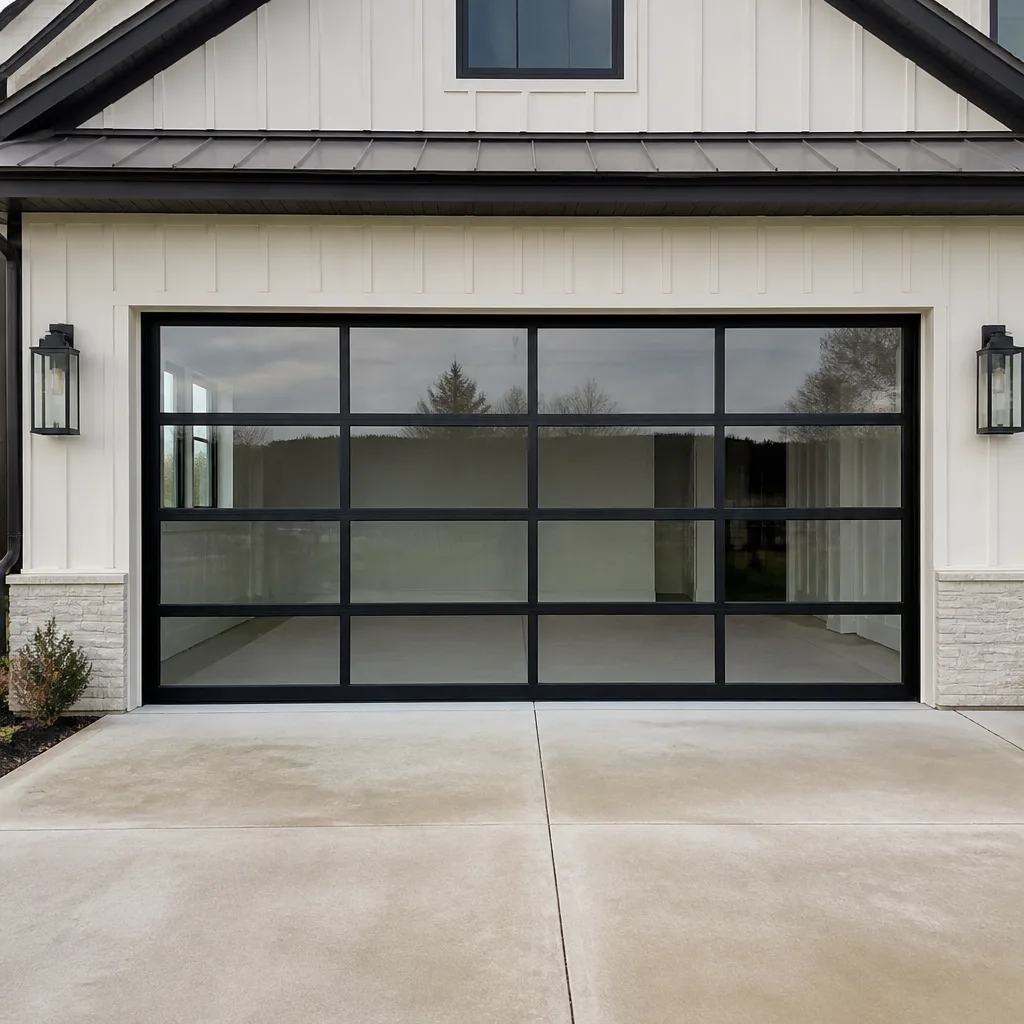 Full-view glass
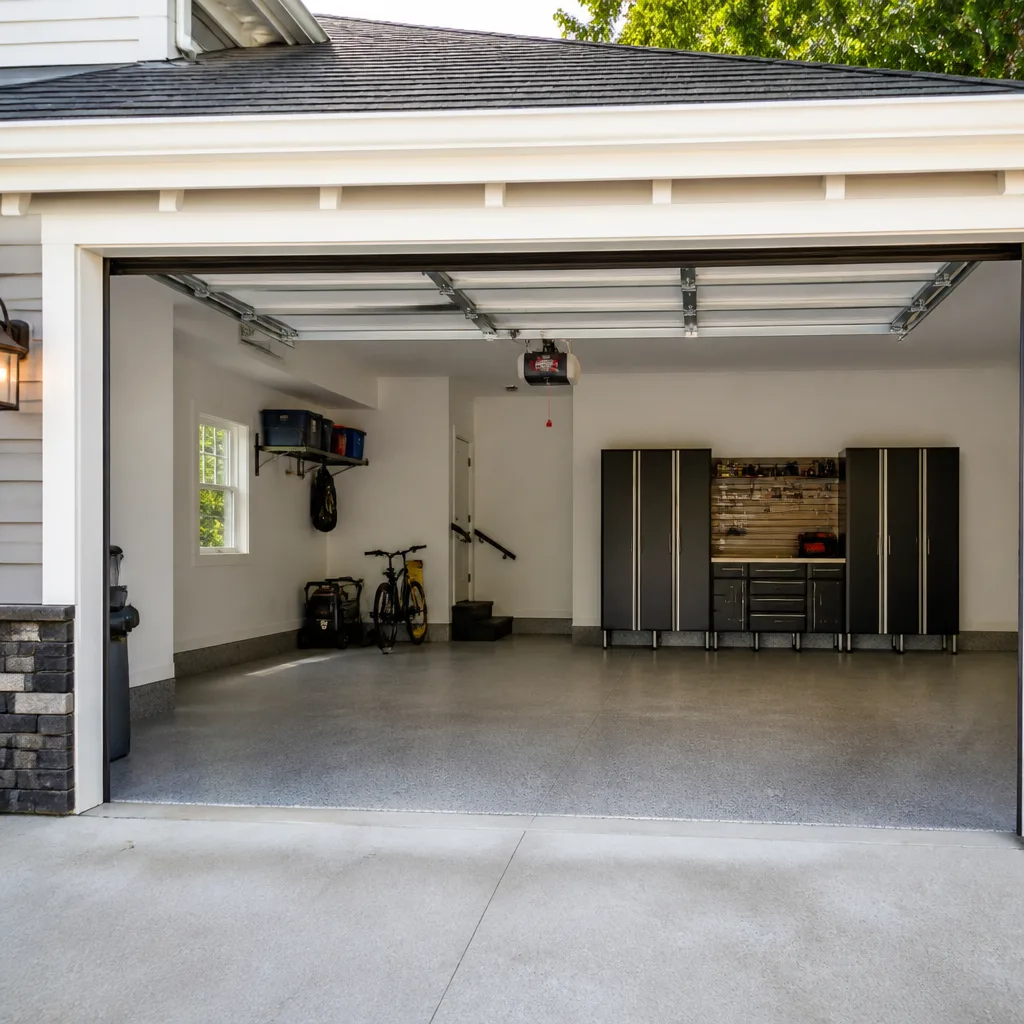 LiftMaster openers
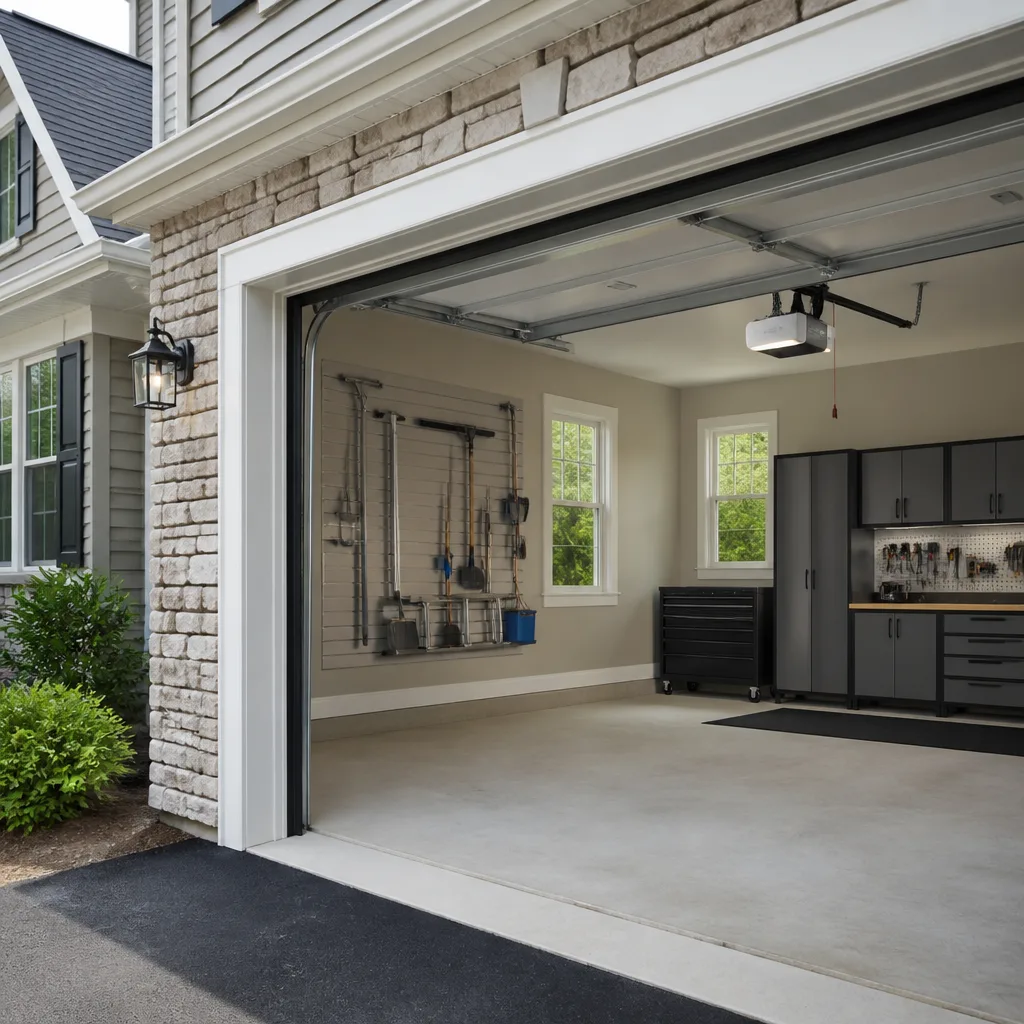 Chamberlain openers
Full 25-point door and opener safety check with every visit - springs, cables, rollers, tracks, and your LiftMaster or Chamberlain opener included
You get a price before we start. It does not change when the pro arrives.
Get your free estimateDIY vs Professional Garage Door: The New Haven Homeowner’s Decision Guide
Most articles about garage door repair frame the DIY question around money. That’s the wrong lens. The right one is risk, and the risks are not evenly distributed. Weatherstripping can’t hurt you. A torsion spring can. A homeowner in New Haven can safely handle half a dozen garage door tasks with a ladder and a Saturday morning. That same homeowner has no business putting a winding bar into a torsion spring, no matter how many tutorials they’ve watched. This guide draws a hard line between those two worlds, with reasoning that respects your intelligence. You’ll get the task-by-task breakdown, a real cost comparison for the New Haven market, the warranty rules most homeowners learn about too late, and a clear path to deciding what belongs to you and what belongs to a professional.
Quick Answer
You should DIY the low-risk maintenance tasks: weatherstripping, lubrication, track cleaning, photo-eye sensor alignment, and tightening loose hinges and brackets. You should call a professional for anything involving torsion springs, extension springs, cables, cable drums, bottom brackets, and structural track or panel work, because those components store enormous energy or hold the door’s weight and can cause serious injury. For repair and adjustment work in New Haven, a professional visit usually costs about the same as a botched DIY attempt once you add up parts, time, and the cost of fixing what went wrong.
Styles & brands we work with
- Raised-panel steel
- Carriage house
- Modern flush
- Full-view glass
- LiftMaster openers
- Chamberlain openers
Table of Contents
- Where the Real Line Between DIY and Professional Sits in New Haven
- What’s Genuinely Safe to DIY (And What It Saves You)
- What Belongs to a Professional, Every Time
- DIY vs Professional Cost: A Real New Haven Comparison
- How Improper DIY Work Voids Manufacturer Warranties
- When a Successful DIY Repair Still Causes an Insurance Complication
- The ‘One and Done’ Argument: Why a Botched Job Costs More
- New Haven Housing and Climate: Why Local Conditions Change the Math
Where the Real Line Between DIY and Professional Sits in New Haven
The garage door is the largest moving object in most New Haven homes. It weighs between 130 and 350 pounds depending on material and insulation, and it moves on a system of springs, cables, and tracks that are under constant tension. That’s the first thing to understand: the door is not a static object sitting on hinges. It’s a mechanical system with stored energy that must be managed even when the door is closed.
The energy varies wildly by component. A torsion spring at rest, fully wound, holds enough force to do real damage if it releases suddenly. A well-lubricated roller holds none. Cables under load can snap with little warning. A photo-eye sensor runs on low voltage and can’t hurt anyone. So the DIY question is really a question about which component you’re touching.
In our experience across New Haven homes, the confusion is usually about the middle of the list. Homeowners correctly avoid springs. They correctly handle weatherstripping. But they’ll also try to adjust a track with a hammer, or retension a cable with a pair of pliers, and that’s where the trouble starts. Track alignment and cable work look manageable in a video. In a real garage, with a real door, they aren’t.
A second factor specific to New Haven: the age of the housing stock. Many garages in neighborhoods like Westville, East Rock, and Beaver Hills were built decades ago, and the doors on them have been adjusted, repaired, and re-adjusted multiple times. Older hardware is more brittle, and a repair that would go smoothly on a newer door can reveal a stressed bracket or a fatigued cable the moment you put a wrench to it. That’s one more reason to know exactly which task you’re starting before you start it.
What’s Genuinely Safe to DIY (And What It Saves You)
Here’s the honest list. These are the tasks a reasonably handy homeowner can do without special tools and without meaningful risk. Each one can be handled with a ladder, a screwdriver, and an hour.
- Replacing bottom weatherstripping. The rubber seal at the base of the door pulls out of its retainer and slides back in. In New Haven’s winters, that seal takes a beating from snowmelt and ice, so it often needs attention. A new seal runs roughly $20 to $40 for a single-car door and much less than a service call.
- Lubricating rollers, hinges, and springs. A light coat of garage door lubricant on rollers, hinges, and spring coils reduces noise and extends the life of the parts. Never use WD-40 on springs or hinges; use a purpose-made garage door lubricant. Cost: under $15.
- Cleaning the tracks. Wipe out dust, debris, and hardened grease with a rag and a mild cleaner. Don’t use solvents that can strip the finish. Cost: essentially nothing.
- Aligning photo-eye sensors. If the door reverses immediately after closing, the sensors are usually misaligned. Nudge each sensor until its indicator light is solid. Cost: zero. Do this after every move, every cleaning, and any time a child or pet has bumped a sensor bracket.
- Tightening loose hinge and bracket bolts. A socket set and five minutes. Loose hardware causes rattling and uneven door travel. Snug them down; don’t over-torque, especially on older hardware.
- Replacing a remote battery or reprogramming a remote. This is a homeowner task on any brand, whether you have a LiftMaster, a Chamberlain, or a Genie opener. Cost: a couple of dollars for a battery.
The savings on this list are small in dollar terms and large in time terms. You can knock out most of it in one afternoon. The point isn’t that DIY saves you a service call on weatherstripping; it’s that these tasks are the right place to put your own hands, and knowing which tasks belong on this list is what protects you from the ones that don’t.
What Belongs to a Professional, Every Time
This is the list to take seriously. Every item here involves a component that stores significant energy, holds the weight of the door, or fails catastrophically if the repair is done incorrectly. No amount of video preparation changes that.
- Torsion spring replacement. The torsion spring is the wound coil above the door that counterbalances its weight. To replace it, you must unwind the existing spring and wind the new one to a specific tension. If the winding bar slips while the spring is under tension, the spring can release its energy instantly. This is why garage door spring repair is treated as a specialist job by anyone who actually does it for a living. The spring must be matched to the door’s weight; guessing at the wire gauge or the number of turns produces a door that closes hard, opens unevenly, or fails early.
- Extension spring replacement. Extension springs run along the horizontal tracks and stretch under tension. They can fail without warning, and when they do, the door can drop. They typically require safety cables, and if the existing cables are missing or damaged, replacing the spring without addressing them is unsafe.
- Cable and drum work. The cables are what actually lift the door, and the drum on each side is where they wind. A cable under load can snap and whip. A drum that’s out of position can drop the door. This is not a homeowner repair.
- Bottom bracket replacement. The bottom bracket holds the cable at the base of the door, and it’s under constant load. It’s one of the most dangerous parts to touch. Leave it to a professional.
- Track realignment with structural implications. A slightly bent track can sometimes be adjusted. A track that’s out of plumb, or a door that’s come out of its track entirely, needs a trained eye. Forcing a track with a hammer usually cracks the roller or bends the panel.
- Panel and section replacement. If a panel is dented or cracked, the replacement has to match the original profile and color. Amarr and Wayne Dalton panels, for example, have specific profiles that don’t interchange with other brands. Ordering the wrong panel wastes time and money.
- Any work on an opener’s internal wiring or capacitor. Openers carry line voltage. If the opener is dead, the failure could be a capacitor, a logic board, or wiring. That’s work for a professional, and it’s part of what garage door opener repair covers.
For the record: the reason those components appear on this list isn’t that homeowners are careless. It’s that a fully wound torsion spring can release its stored energy in milliseconds if the tool slips, and the failure mode is not something you can practice your way out of. A professional with a winding bar has done it hundreds of times and knows the feel of a spring that’s about to go.
DIY vs Professional Cost: A Real New Haven Comparison
This is the comparison most articles skip, and it’s where the DIY argument usually falls apart. Here’s a realistic breakdown for the four most common garage door jobs in the New Haven area. These ranges are typical estimates for our market, and the written estimate you receive is what sets the final price.
| Task | DIY parts + tools | DIY time | Professional estimate |
|---|---|---|---|
| Bottom weatherstripping (single door) | $20 – $40 | 1 hour | $100 – $175 installed |
| Torsion spring replacement (one spring) | $40 – $80 in parts, plus winding bars ($20 – $40), plus injury risk | 2 – 4 hours for a skilled hobbyist; often abandoned | $180 – $340 per spring |
| Matched pair of torsion springs | ~$80 – $160 in parts, plus tools | 3 – 5 hours; the second spring is not cheaper than the first | ~$360 – $680 for the pair (roughly double the single-spring price) |
| Cable replacement (one side) | $25 – $50 in parts | 1 – 2 hours, high injury risk | $150 – $300 |
| Track realignment | Free if it goes well; $100+ in replacement parts if it doesn’t | 1 – 2 hours | $125 – $250 |
| Opener repair (diagnosis + fix) | Variable; wrong part is common | 2 – 4 hours plus a possible second attempt | $150 – $350 depending on the failure |
Read those numbers honestly. On weatherstripping, DIY wins and it’s not close. On a torsion spring, the DIY parts cost is less than half the professional quote, but the tools, the time, and the risk close most of that gap. On cables and drums, the calculation tips squarely toward professional help. And the last line, the opener, is where DIY almost never pays: the diagnosis is the hard part, and the wrong $40 board is $40 wasted.
One more thing worth stating plainly. The price for any of these jobs is quoted and agreed before work starts, and the written estimate sets the final price. There are no surprise line items when the technician arrives. That’s true whether you’re calling for garage door repair in New Haven or for a scheduled tune-up.
How Improper DIY Work Voids Manufacturer Warranties
This is the part of the decision guide most homeowners never hear until it’s too late. Garage doors and openers come with manufacturer warranties, and those warranties have specific terms about who is allowed to service the equipment. The terms differ by brand. Clopay, Amarr, Wayne Dalton, Raynor, and the rest each publish their own language, and it’s worth reading yours before you pick up a wrench.
What almost all of them share is a short list of homeowner actions that trigger exclusions. They typically include:
- Unauthorized repair or modification. Most warranties exclude failures caused by repairs performed by someone not authorized by the manufacturer.
- Improper spring tensioning. If a torsion spring is wound to the wrong number of turns or the wrong spring is installed, the door’s balance is off, which loads the opener and the hinges beyond design. That failure is often excluded as improper use.
- Wrong part substitution. Using a generic panel, an off-brand hinge, or an incorrect roller in place of the specified part is a common exclusion.
- Door weight change without rebalancing. Adding a heavier panel, a new reinforcement strut, or an aftermarket insulated insert without adjusting the springs can void the door warranty and the opener warranty at the same time.
- Damage from forced operation. If a door is visibly broken and the homeowner keeps operating it, the resulting damage is excluded.
The pattern is consistent: warranties protect against defects, not against the consequences of a homeowner’s repair. If your door is still under warranty, that’s a strong argument for letting a technician handle any spring, cable, or opener work. A branded service call preserves the warranty; a DIY attempt can end it.
When a Successful DIY Repair Still Causes an Insurance Complication
This is a subtler version of the same problem. Even when a DIY repair technically works, it can change how your home insurer views a future claim. That’s not an alarmist point; it’s a practical one about how insurance companies underwrite attached structures.
Here’s what matters. An attached garage is part of the dwelling structure. A detached garage is often treated as a separate structure with its own coverage limit. Either way, when a garage door fails and causes damage (to the door itself, to a vehicle, to the interior of the garage, or to a person), the insurer will look at whether the door was in a proper state of repair and whether recent work contributed to the failure. If the answer is “the homeowner replaced the springs last month and they failed,” the claim can become complicated. If the answer is “a technician replaced the springs,” it generally doesn’t.
There’s a fire-safety angle too. In homes where the garage is attached to the living space, the door between the garage and the house is often a fire-rated door, and the wall and ceiling assemblies are fire-separated. Altering those components during a garage door project, even if the door itself looks fine, can put the home out of compliance with the fire separation the building code expects. If your project touches that boundary, check with New Haven’s building department before you start. It’s a short call that saves a long headache later.
The point isn’t that a well-executed DIY repair is dangerous to your insurance. It’s that the professional quote includes a paper trail you don’t get from a Saturday morning on a ladder. For any work that touches the door’s structural components, that paper trail matters.
The ‘One and Done’ Argument: Why a Botched Job Costs More
Here’s the argument that settles most of these decisions. When a DIY repair on a spring, a cable, or a track goes wrong, the cost isn’t the original quote minus what you saved. It’s the original quote plus the cost of undoing what went wrong.
Consider the common failure patterns. A spring wound to the wrong number of turns doesn’t just perform badly; it may run for a few weeks and then fail, stressing the opener in the meantime. A track forced back into place with a hammer usually cracks a roller or bends a hinge, which then produces uneven wear on the door. A cable replaced without addressing a worn drum can fail again within weeks. Each of these doesn’t just add cost; it adds a second visit. The door ends up costing more than the original professional quote, and it took two tries.
There’s also a safety angle that doesn’t show up on the invoice. A garage door that’s out of balance, or operating on incorrectly tensioned springs, forces the opener to work harder. That shortens the opener’s life and can cause the door to reverse unexpectedly. For a family with small children or pets, an unreliable door is a real hazard. When you call a professional once and the job is done correctly, you get a door that behaves predictably, which is the entire point.
The flip side of the argument matters too. Not every job needs a service call and not every homeowner needs a professional. If you’re replacing weatherstripping or lubricating rollers, doing it yourself is the right call and it saves money. The “one and done” argument is about the components where a single correct repair beats two incorrect ones, and those are the ones on the never-DIY list.
New Haven Housing and Climate: Why Local Conditions Change the Math
New Haven is not a generic garage door market. Two local factors change the DIY-versus-professional calculation in ways that are specific to this city.
The first is the housing stock. New Haven has a lot of older homes, and older garages often have doors that have been through multiple cycles of repair. Wood-framed garages with settling foundations can pull a track out of plumb; a door that ran fine in a newer build can rattle and bind in a garage that’s shifted a half-inch over decades. That kind of misalignment isn’t a spring or cable problem, and it’s not something a homeowner should force. It’s a structural read that a trained technician makes by looking at the door’s travel and the track’s verticality.
The second is the climate. New Haven’s winters bring freeze-thaw cycles, and that does two things to a garage door. It works the bottom seal harder than in milder climates, so weatherstripping wears out faster and DIY replacement pays off more often. It also stresses the springs, because the door is asked to open and close in cold conditions and the metal contracts. A spring that’s near the end of its life tends to fail in the coldest weeks. That’s when we field a lot of calls, and it’s why spring work is worth scheduling before winter, not after a break.
The neighborhoods matter for a third reason: garage door variety. Homes across New Haven, from East Rock to Westville, use a range of door types, from older Wayne Dalton and Raynor setups to newer Amarr and Clopay installations. Each brand has its own spring specifications, panel profiles, and opener compatibility. When you call for a service visit, knowing the brand helps get the right parts ordered the first time. That’s why we work on the major brands directly, including LiftMaster, Chamberlain, Genie, Clopay, Amarr, Wayne Dalton, Craftsman, and Raynor; the visit is more efficient when we’re not guessing.
Common Mistakes to Avoid
- Assuming the spring broke “for no reason.” Springs break because they’re at the end of their cycle life, usually around 10,000 cycles, and a broken spring is almost always a sign the second spring is close behind. If one breaks, plan for a matched pair rather than replacing it alone.
- Forcing a door that’s come off its track. A door out of its track looks fixable with a lift and a shove. It usually isn’t. The panel, the roller, and the track can all bend under forced operation, turning a $150 repair into a panel replacement.
- Using a ladder on an uneven garage floor. New Haven garages are often older, with sloped or cracked concrete. A ladder on a sloped floor is a fall hazard. This is one of the leading causes of DIY injury in garage work.
- Ignoring the opener’s manual release. If you need to open a door with a broken spring by hand, the red emergency release is the safe way. Pulling the door up with the opener still engaged damages the opener and can drop the door.
- Buying the wrong replacement spring. Springs are matched to door weight, height, and wire gauge. An off-the-shelf spring from a big-box store is almost never the right specification, and the resulting door will run poorly.
- Omitting a written quote before the job. Even when you hire a professional, ask for the price in writing before work starts. The estimate you agree to is the price you pay, and a verbal “about” number isn’t an estimate.
- Letting a small issue become a big one. A rattling door, a door that reverses, or a door that opens slowly are all early warnings. Addressing them when they’re small is cheaper than a failure with six inches of snow on the ground.
See the difference
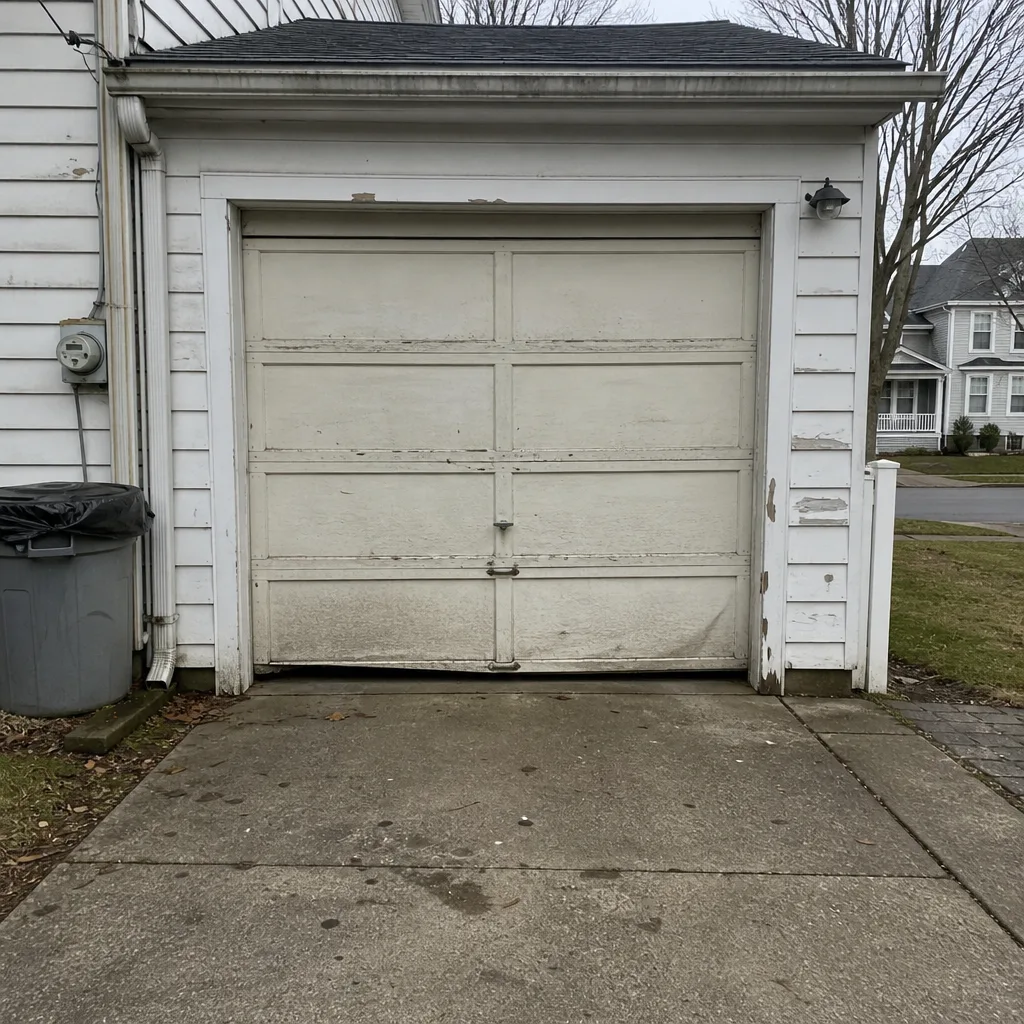 Before
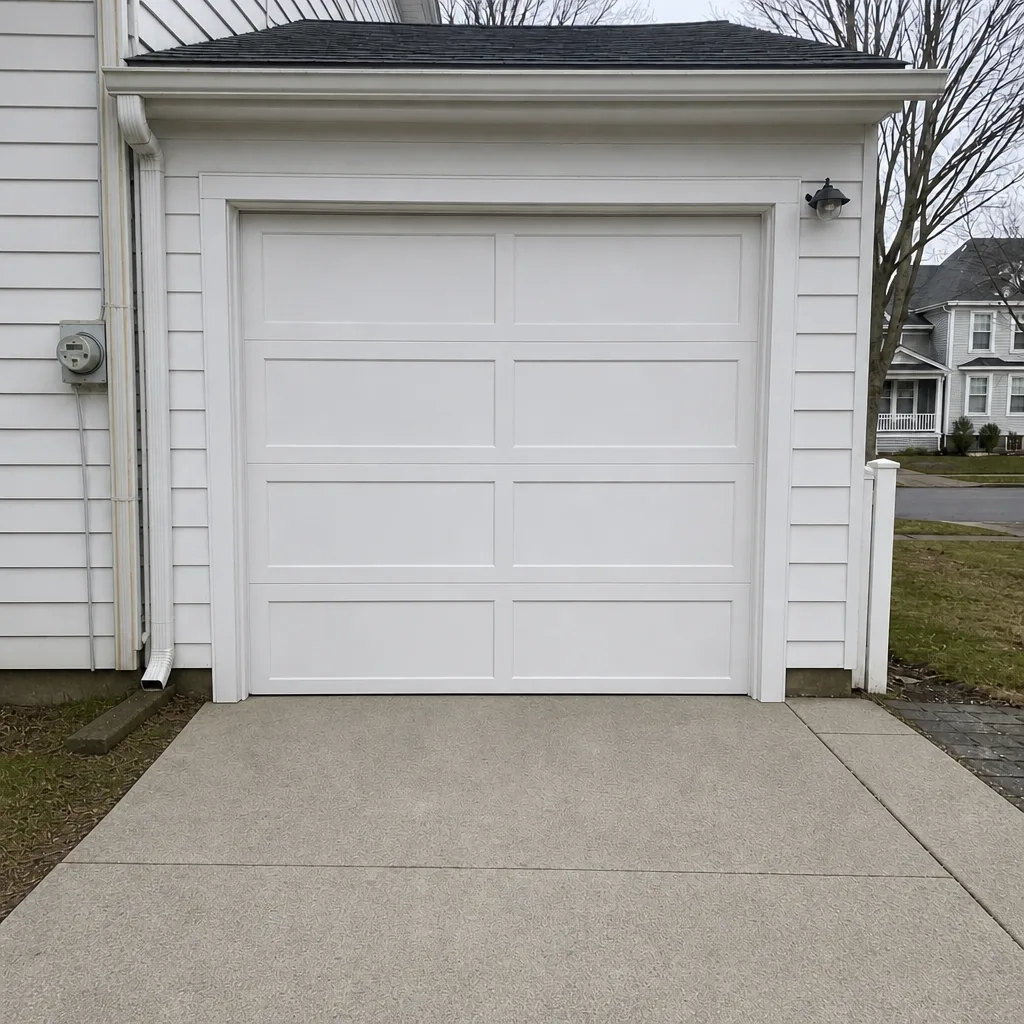 After
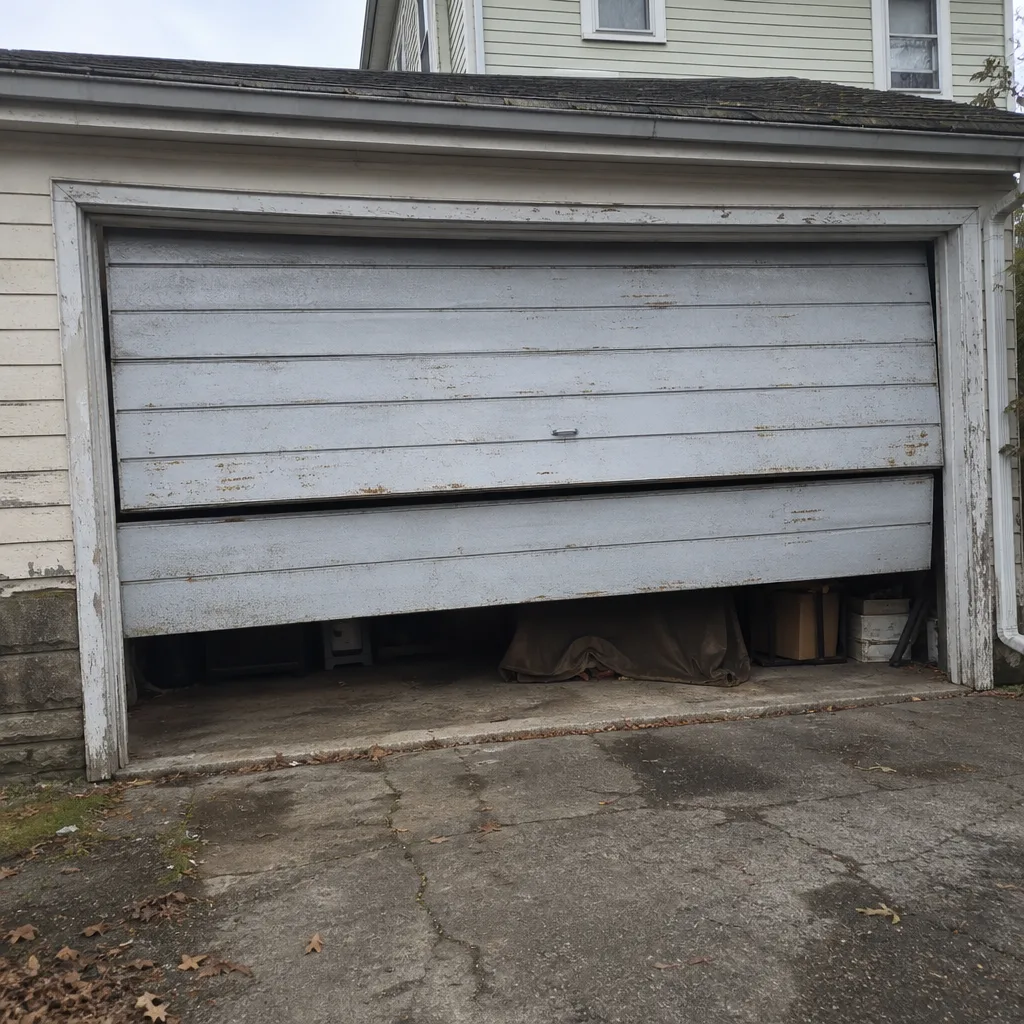 Before
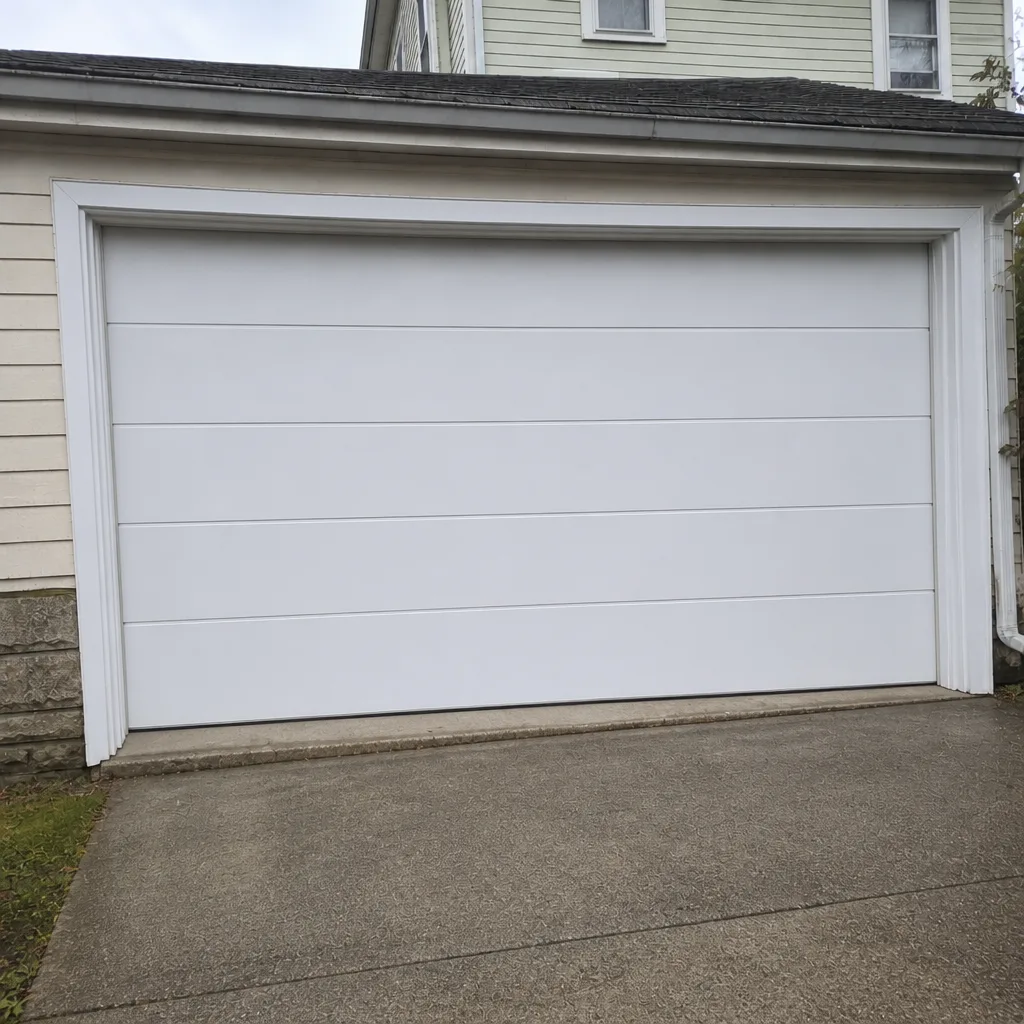 After
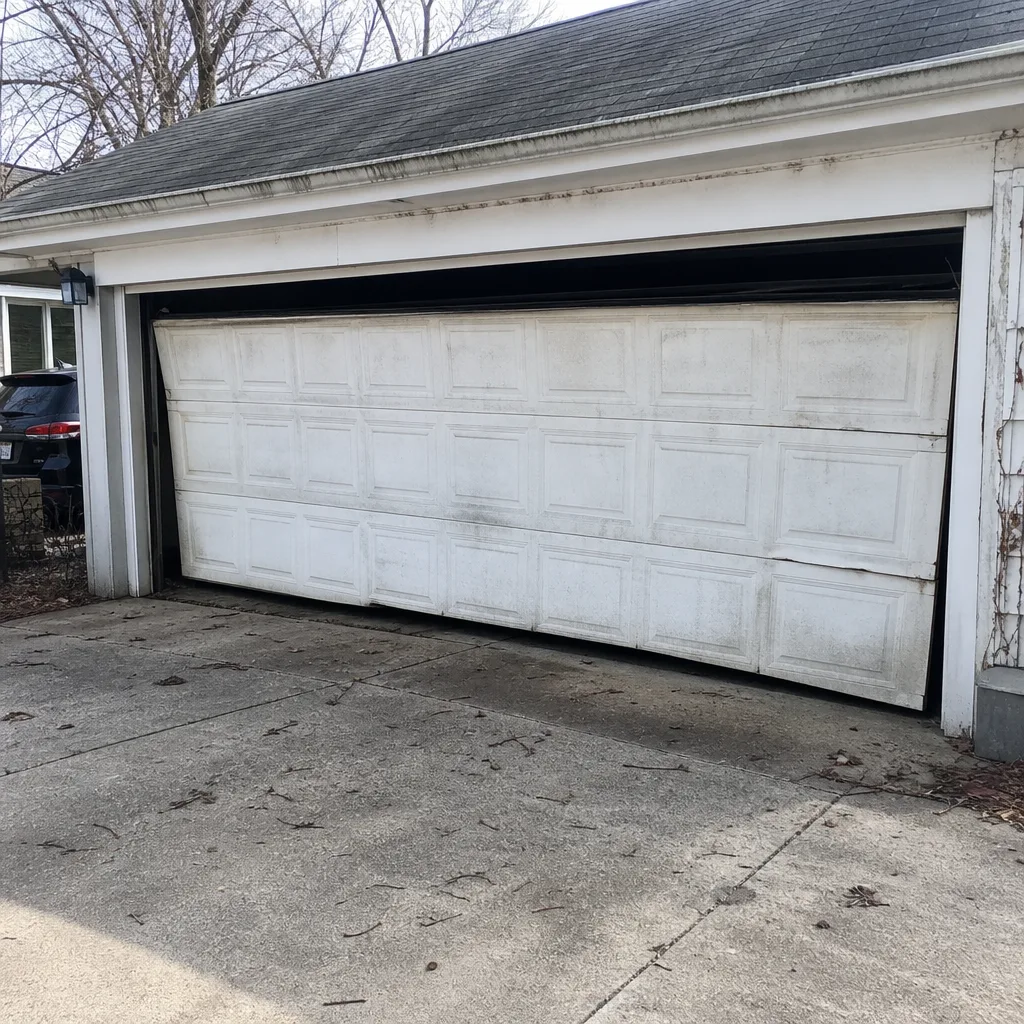 Before
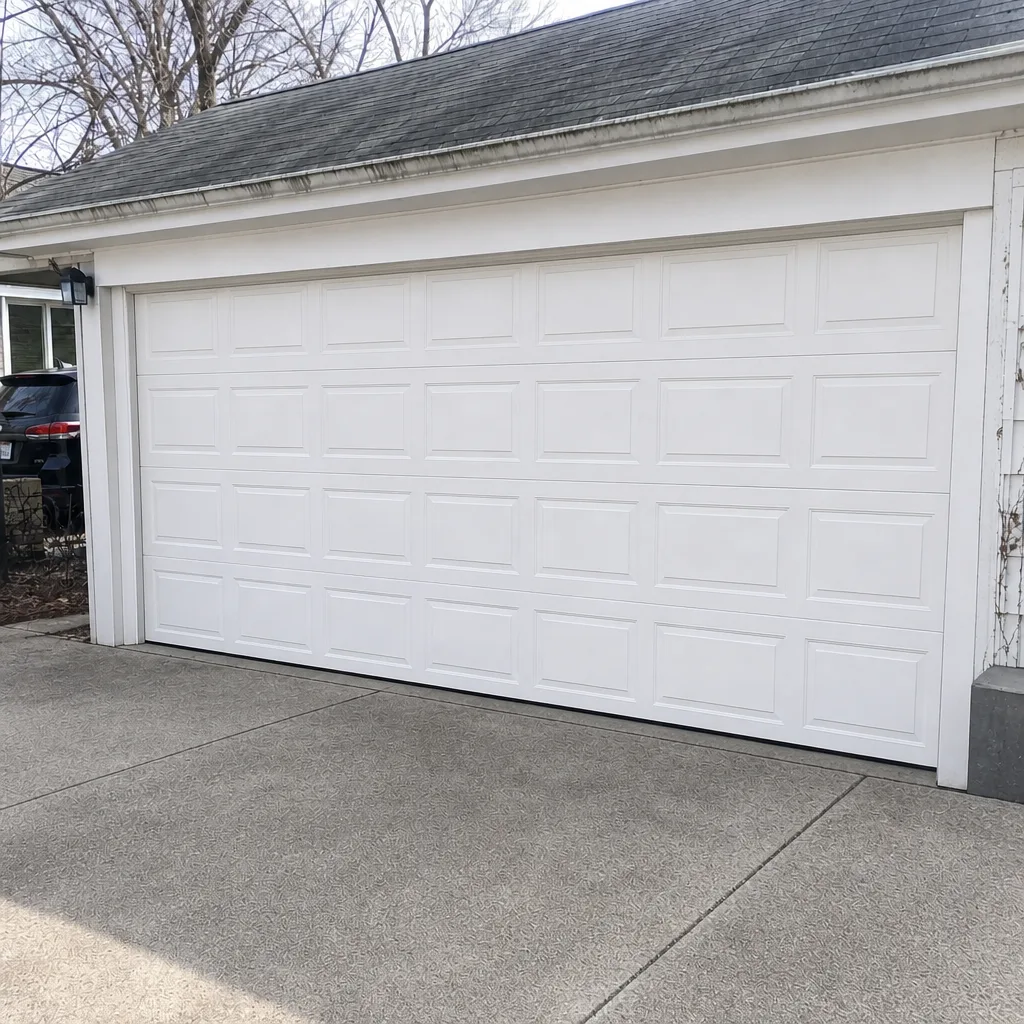 After
When to Call a Professional
You should call a professional if any of the following apply: the door won’t open or close, the springs have broken, a cable is visibly frayed or hanging loose, the door is out of its track, a panel is dented or cracked, the opener runs but doesn’t move the door, or the safety reverse test fails. You should also call if the door is under warranty, if the garage is attached to your living space, or if you’re not certain which task you’re looking at. New Haven Garage Door Repair Pros offers free estimates in New Haven; call (877) 492-2068 and we’ll walk through the symptoms with you before deciding whether a visit makes sense. Our technicians have up to 13 years of experience, and the quote is set per job in writing before anything starts.
Frequently Asked Questions
No. Torsion and extension springs are under extreme tension and require specialized tools, training, and the correct spring specification for your door’s weight. The injury risk is high and the failure mode is sudden. A professional can also check the spring’s balance, cable condition, and drum alignment while they’re there. Call (877) 492-2068 for an estimate.
Typical estimates run $180 to $340 for one spring, and roughly double that for a matched pair, which is what most doors need. The written estimate you receive is the final price. Call (877) 492-2068 for an exact quote; estimates are free.
For repair work, often yes: same-day service is available. Call (877) 492-2068. We answer 24/7. Fast dispatch from 7am to 7pm, Sunday through Friday.
No. The price is quoted and agreed before any work starts, and the written estimate sets the final price. If the job turns out to need more than expected, we discuss the change with you before doing the additional work. Call (877) 492-2068 for a free estimate.
Yes, because spring specifications, panel profiles, and opener compatibility differ by brand. We work on LiftMaster, Chamberlain, Genie, Clopay, Amarr, Wayne Dalton, Craftsman, and Raynor systems, which means we can diagnose the door you actually have. Knowing the brand when you call helps get the right parts ordered the first time. Call (877) 492-2068.
The local professional who comes to your home is licensed and insured as their state requires. We connect you with a vetted local pro for the work, and you’ll get an upfront price in writing before the job begins. Call (877) 492-2068 for a free estimate.
The Bottom Line
The DIY-versus-professional question has a clear answer once you stop framing it as cost and start framing it as risk. Weatherstripping, lubrication, track cleaning, sensor alignment, and basic hardware tightening are yours to handle, and doing them yourself is smart. Torsion springs, extension springs, cables, cable drums, bottom brackets, structural track work, and opener internals belong to a professional, because the failure modes are serious and the cost of a second attempt usually exceeds the original quote. If you’re in New Haven and you’re unsure which side of the line you’re on, call. New Haven Garage Door Repair Pros can give you a straight answer and a written estimate before you decide.
Ready to get your door back up and running? Call New Haven Garage Door Repair Pros at (877) 492-2068 for a free estimate. We answer 24/7. Fast dispatch from 7am to 7pm, Sunday through Friday. When you’re looking for New Haven Garage Door Repair Pros to handle the job in one visit, we’ll be upfront about what’s worth doing yourself and what isn’t.
Written by the team at New Haven Garage Door Repair Pros.