
Last updated November 21, 2026
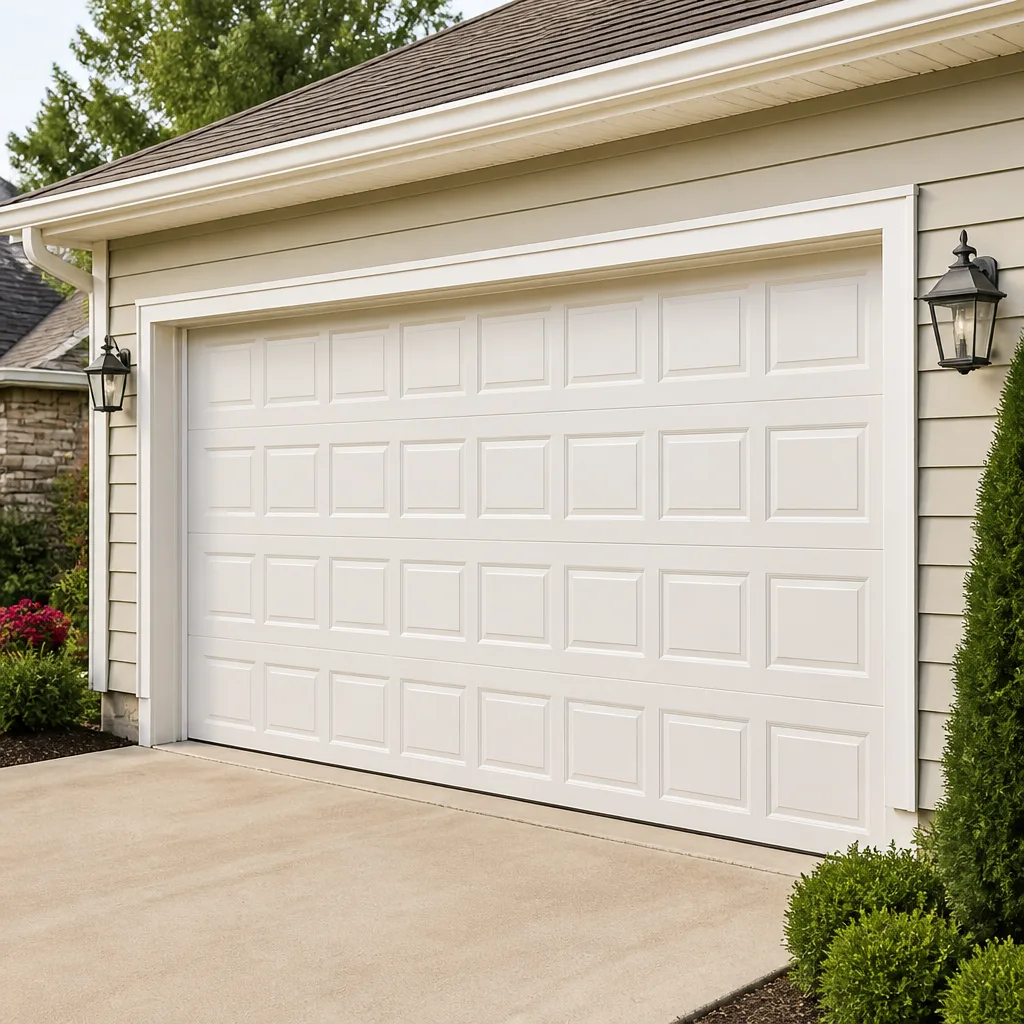 Raised-panel steel
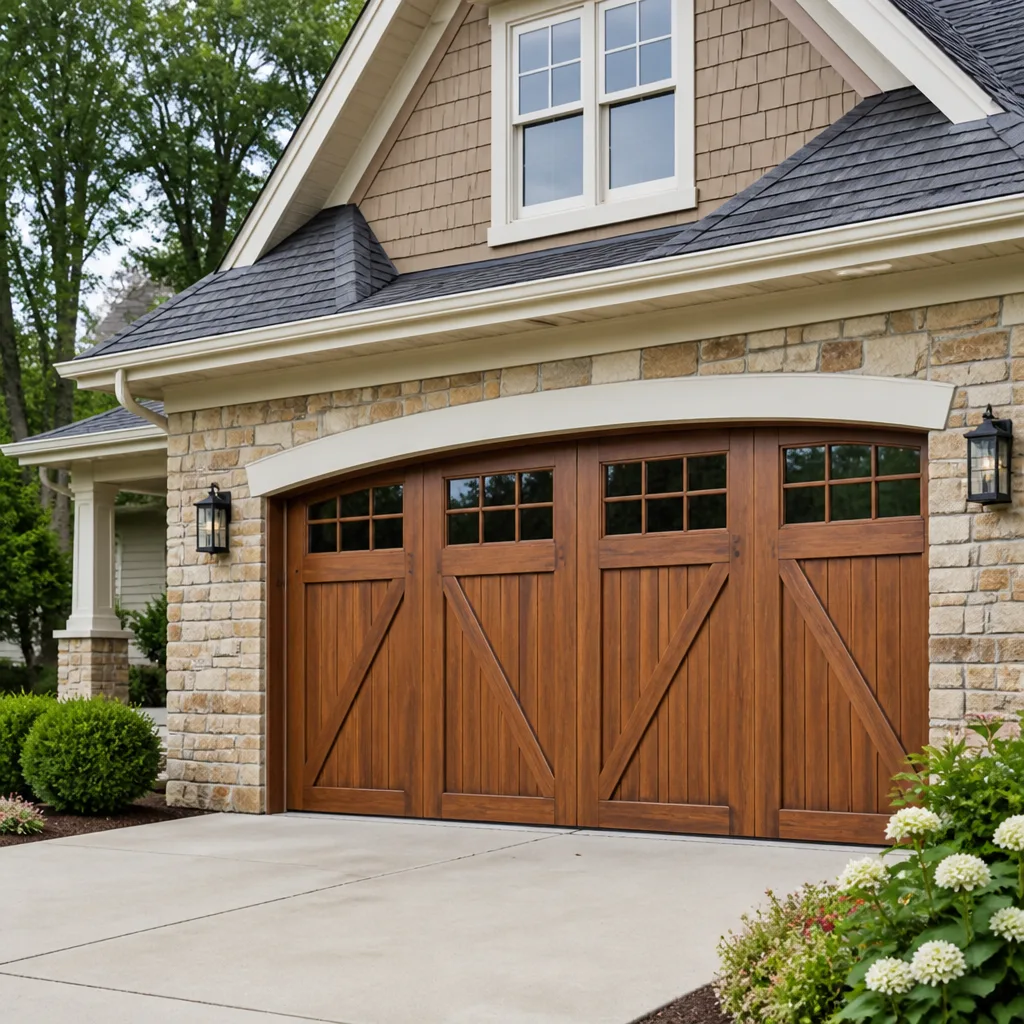 Carriage house
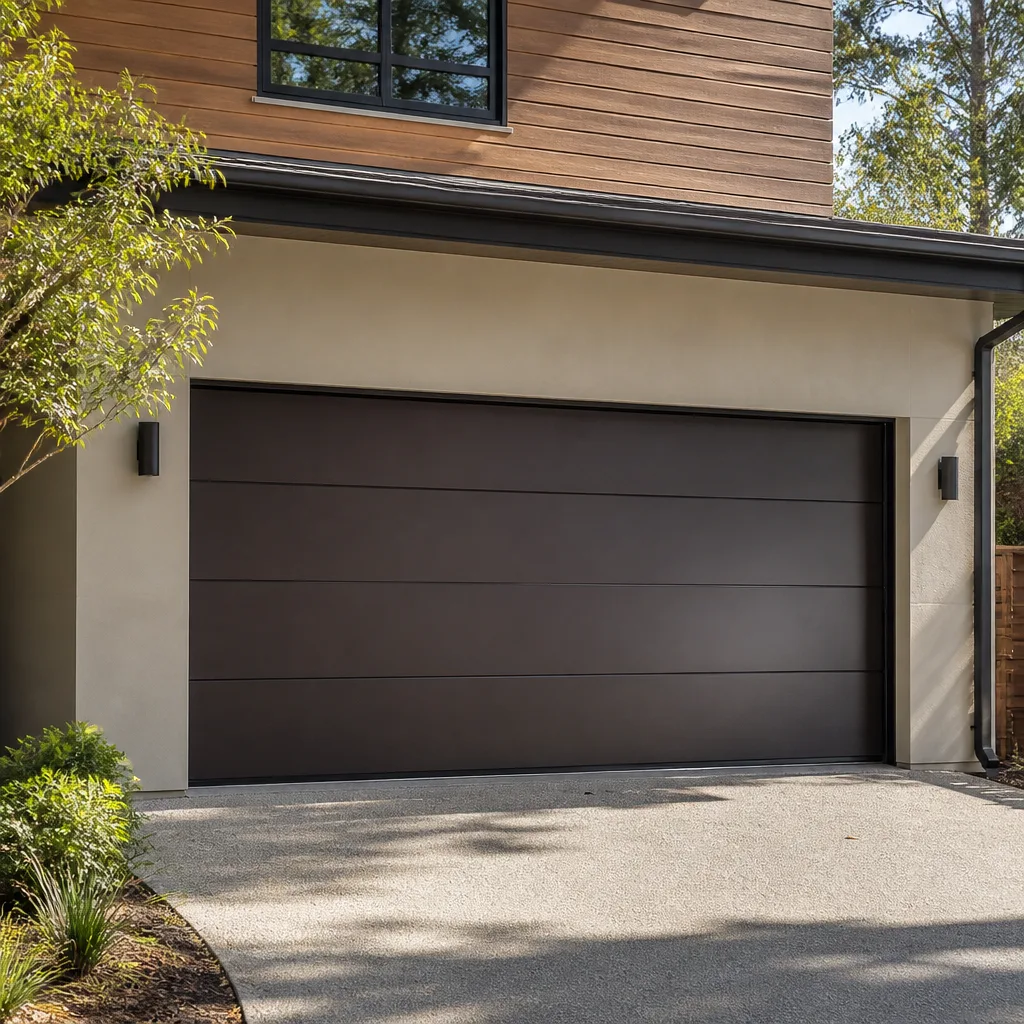 Modern flush
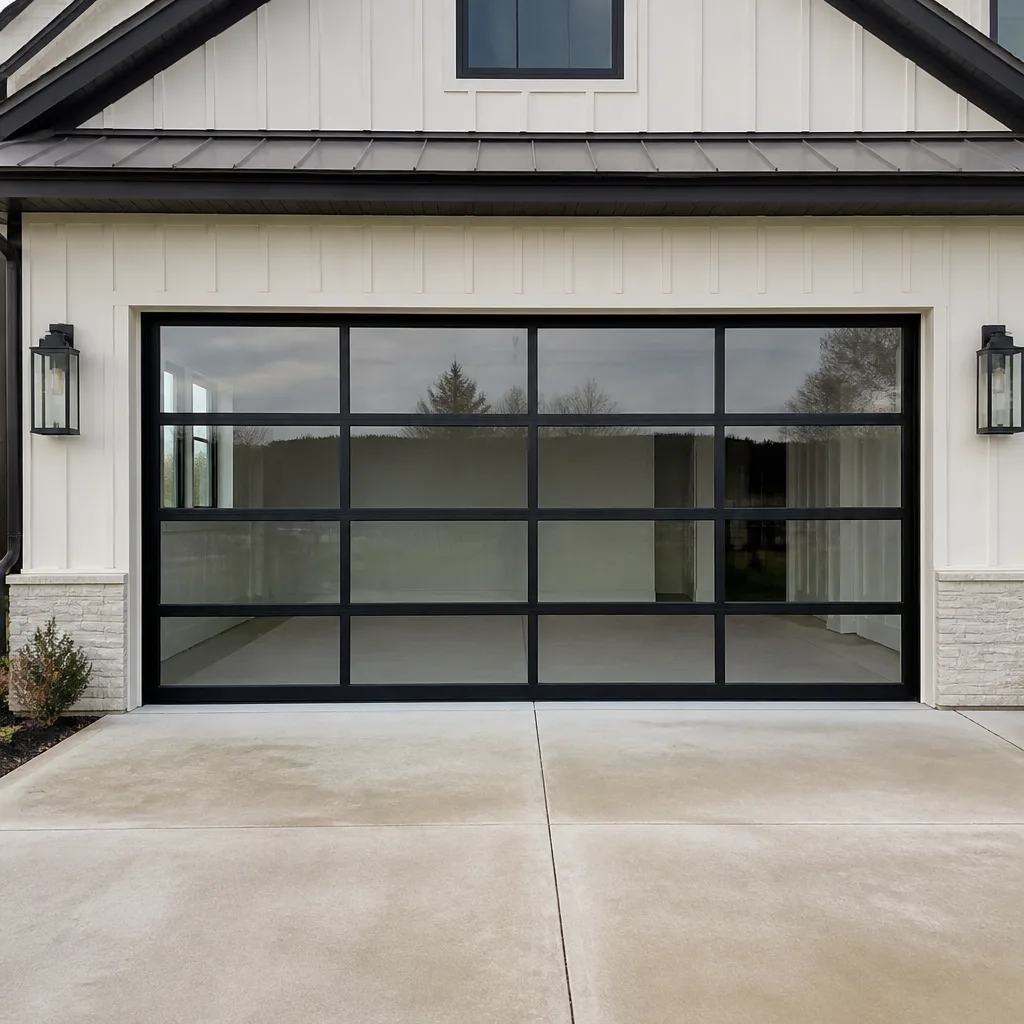 Full-view glass
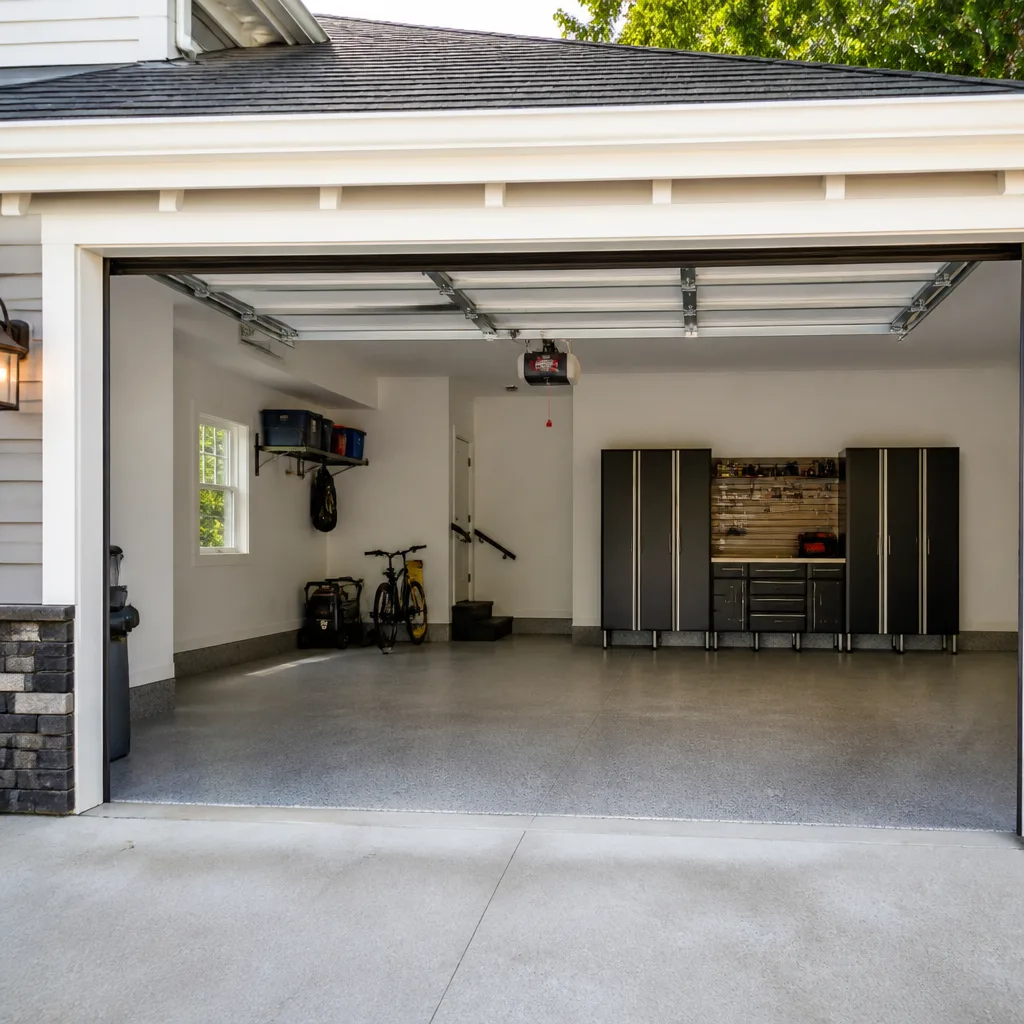 LiftMaster openers
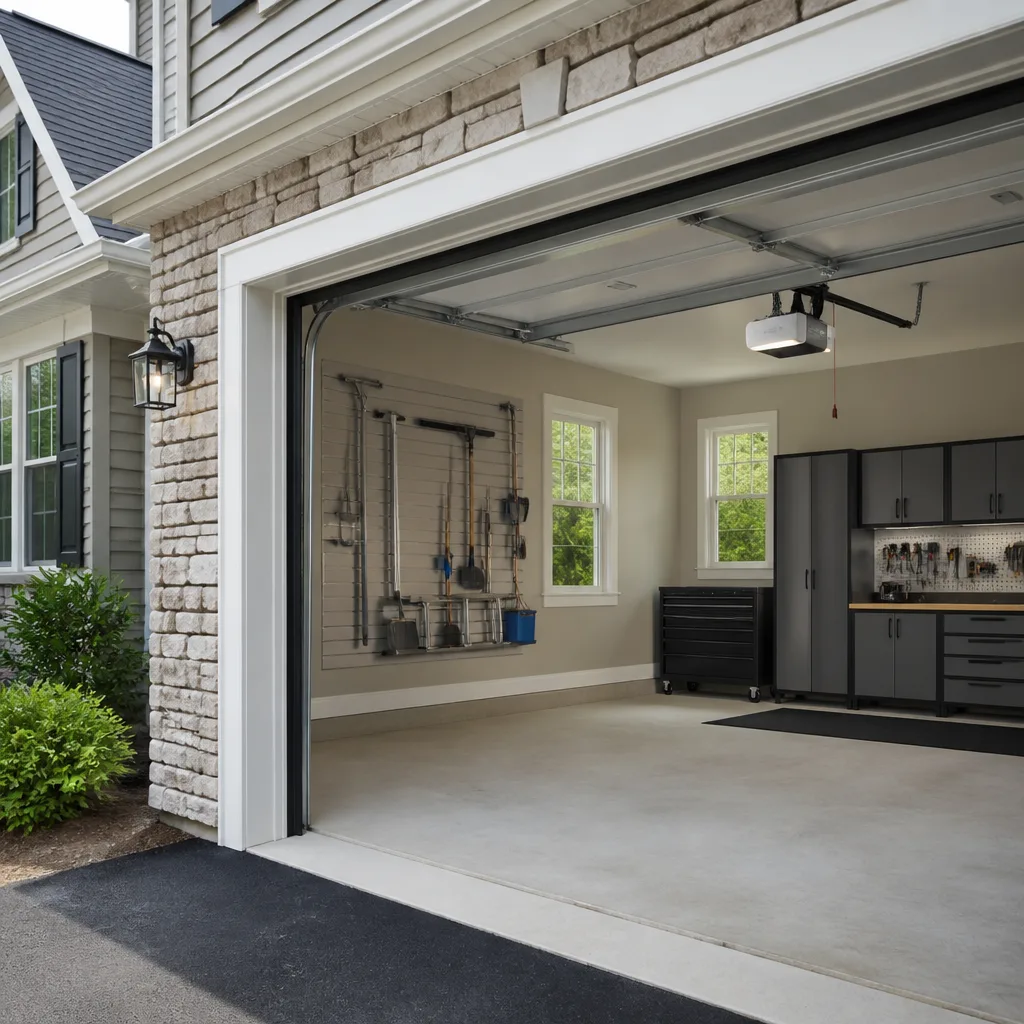 Chamberlain openers
Full 25-point door and opener safety check with every visit - springs, cables, rollers, tracks, and your LiftMaster or Chamberlain opener included
You get a price before we start. It does not change when the pro arrives.
Get your free estimateThe Complete Guide to Garage Doors in New Haven
Most New Haven homeowners start shopping for a garage door by browsing styles and colors. That’s the wrong end of the process. The constraint comes first: what your header height, track layout, and ceiling clearance will actually allow. In parts of Westville and East Rock, where plenty of homes went up before 1950, that constraint can eliminate half the openers on the market before you’ve looked at a single one. A door that fits a modern colonial in Morris Cove may not fit a triple-decker a few streets away. This guide walks through the full picture for New Haven: how the city’s housing stock shapes your options, what the historic districts require, how Long Island Sound humidity affects material choice, and how to think about springs, tracks, panels, openers, and insulation without drowning in jargon.
Quick Answer
The right garage door for a New Haven home depends less on style preference than on your house’s era and structure: pre-1950 homes often have tight header clearance that limits opener types and requires low-headroom or side-mount solutions, while newer builds can take standard torsion systems and smart openers. Material choice should account for Long Island Sound humidity, and homes inside historic districts like Wooster Square and East Rock may face review requirements before exterior changes. Get the measurements and the district rules sorted first, then choose the door.
Styles & brands we work with
- Raised-panel steel
- Carriage house
- Modern flush
- Full-view glass
- LiftMaster openers
- Chamberlain openers
Table of Contents
- How New Haven’s Housing Stock Shapes Your Door Options
- Historic Districts and What They Mean for Your Door
- Long Island Sound Humidity and Material Selection
- The Parts of a Garage Door, Explained Simply
- Choosing an Opener: Clearance First, Features Second
- Insulation Ratings Without the Jargon
- Multi-Brand Specialist or Single-Brand Dealer?
- What Garage Door Work Costs in New Haven
How New Haven’s Housing Stock Shapes Your Door Options
New Haven isn’t one housing market. It’s several, stacked next to each other. That matters because garage door systems are dimension-dependent in ways that other home improvements aren’t. A kitchen cabinet can be cut down. A torsion spring system needs the clearance it needs.
Homes built before 1950, which make up a large share of Westville, East Rock, and the blocks around Wooster Square, were often built with garages that were an afterthought. Detached garages behind triple-deckers frequently have low ceilings, shallow headers, and narrow openings. Some were built for a single Model A and never widened. When we assess these structures, three measurements decide almost everything:
- Header height above the opening. Standard torsion systems need roughly 12 inches of headroom above the door. Below that, low-headroom torsion kits or extension springs become the practical route.
- Side clearance. Standard track needs about 3.5 to 4.5 inches on each side of the opening. Tighter than that and low-profile track or a different track configuration is required.
- Backroom (ceiling depth). A standard sectional door needs the door’s height plus about 18 inches of travel space behind the opening. Short garages may need a high-lift or low-clearance setup, or in tight cases a one-piece or roll-up door.
Mid-century colonials in areas like Beaver Hills often have attached garages with more generous dimensions but aging original hardware. Modern builds on the city’s edges tend toward standard 7-foot openings with predictable clearances, which opens up the full catalog.
The practical takeaway: measure before you shop. A door and opener combination that’s standard in a new development can be physically impossible in a 1920s carriage house. That’s not a sales obstacle; it’s geometry.
Historic Districts and What They Mean for Your Door
New Haven takes its historic districts seriously, and several of them, including Wooster Square and East Rock, include residential garages visible from the street. If your property sits inside a local historic district, exterior changes may require review before work begins. The rules vary by district and by whether the garage is visible from a public way.
We can’t tell you what your specific district will approve. What we can tell you is how to find out before you order anything:
- Confirm whether your address falls inside a local historic district. The city’s planning or building department can confirm this.
- Ask what review, if any, applies to garage door replacement on your property.
- Ask whether the review covers the door style, the material, the color, or all three.
- Get any approval in writing before placing an order, since custom doors are built to spec and aren’t returnable in the usual way.
In practice, doors that read as traditional, raised-panel steel or wood-look designs in muted colors tend to create fewer review problems than stark modern full-view glass or high-contrast colors. That’s a general observation about how review boards tend to see things, not a rule. Always confirm with the city.
For homes outside a district, the process is simpler, but the city’s building department can still tell you whether a permit applies to your project. Ask before work starts. A quick call saves a slow problem later.
Long Island Sound Humidity and Material Selection
New Haven sits close enough to Long Island Sound that summer humidity is a real factor in how garage door materials age. That doesn’t mean you need a specialty door. It means you should think about what humidity does to each material before you commit.
- Steel. The most common choice, and a good one for this climate. Modern steel doors come with factory finishes and galvanized substrates that handle humidity well. The weak points are the bottom edges and any cut or scratched surface, where moisture can start working on exposed steel. Keeping the bottom seal intact matters more here than in drier climates.
- Aluminum. Naturally rust-resistant, which makes it a low-maintenance pick for humid summers. It dents more easily than steel, so it’s a better fit for garages without a lot of bicycle and lawnmower traffic.
- Wood. Beautiful and appropriate for historic homes, but wood moves with seasonal moisture swings. It needs periodic sealing and refinishing to stay stable. In New Haven’s humid summers, that maintenance schedule is not optional.
- Composite and wood-look steel. These give you the historic look with less moisture sensitivity. Clopay and Amarr both make carriage-house style doors in these materials that suit older New Haven homes well.
Hardware matters too. Springs, hinges, and rollers in a humid environment benefit from galvanized or coated finishes. It’s a small upgrade that pays off in longevity.
The Parts of a Garage Door, Explained Simply
Understanding what’s inside your door makes every conversation with a technician easier, and it helps you spot problems before they become emergencies. Here’s the full system, in plain terms.
Springs
Springs do the heavy lifting. A garage door can weigh a few hundred pounds, and the springs counterbalance most of that so a person or an opener only has to move a fraction of it. There are two types:
- Torsion springs mount on a shaft above the door and twist. They’re the modern standard: quieter, longer-lasting, and easier to balance precisely.
- Extension springs run along the horizontal tracks and stretch. Common on older doors, and they require safety cables running through them as a backup if they break.
Springs are the most dangerous component on the entire door. A torsion spring under load stores a large amount of energy, and a spring that fails while someone is working on it can cause serious injury. This is not a DIY repair. Our garage door spring repair work is handled by technicians trained specifically for it, because getting it wrong is genuinely dangerous.
Tracks
Tracks guide the door up and back. They come in standard radius, low-headroom, and high-lift configurations depending on your garage’s geometry. Bent or misaligned tracks cause the door to bind, which stresses the opener and the panels. Track damage usually follows an impact, and it’s rarely something to leave alone.
Panels and Sections
Sectional doors are made of horizontal panels connected by hinges. A damaged panel can often be replaced individually rather than replacing the whole door, which saves real money. We work with panel systems from Clopay and Wayne Dalton, among others, and matching an existing panel profile is usually the deciding factor in whether a single-panel repair is possible.
Openers
The opener is the motor and control system. Modern openers include safety reversing sensors, force limits, and increasingly, smartphone control. We’ll cover them in the next section.
Choosing an Opener: Clearance First, Features Second
Here’s where the Westville and East Rock clearance issue bites hardest. Most standard ceiling-mount openers need about 2 inches of clearance above the torsion shaft, on top of the headroom the door system itself requires. In a garage with a low header, that combination simply doesn’t fit.
When standard doesn’t fit, the options are:
- Low-headroom torsion systems that reduce the space needed above the door, sometimes paired with a drum configuration that changes how the cables wind.
- Jackshaft (side-mount) openers that mount on the wall beside the torsion shaft instead of hanging from the ceiling. These are the standard solution for low-clearance garages and are available from LiftMaster and Chamberlain, among others.
- Belt-drive versus chain-drive. Belt drives run quieter, which matters in attached garages below bedrooms. Chain drives are louder but typically more affordable and durable for detached garages where noise doesn’t carry into the house.
Smart-home compatibility is worth thinking about before you buy, not after. Openers from LiftMaster, Chamberlain, and Genie generally offer app control and integration with common smart-home platforms, though the specific features vary by model. If you want your phone to tell you the door is open, confirm that the model you’re considering supports it rather than assuming.
When an existing opener stops working, the fix is often a component rather than a whole unit: a gear, a logic board, a safety sensor, or a remote that’s lost its programming. Our garage door opener repair service covers the major brands, so diagnosis starts from what the unit is actually doing rather than from which brand we prefer to sell.
Insulation Ratings Without the Jargon
Insulation in a garage door is measured by R-value, which describes how well the door resists heat flow. Higher is better, but the right number depends on what’s above and beside your garage.
- Attached garage with living space above or beside it. Insulation matters most here. An insulated door reduces heat loss into the house and makes the room above more comfortable in both summer and winter.
- Detached garage used as a workshop or gym. A mid-range insulated door makes the space usable in more months of the year.
- Detached garage used only for parking and storage. Insulation is less critical, though it also stiffens the door and quiets operation, which has value on its own.
Two things matter as much as the R-value number. First, the perimeter seal: an insulated door with a worn bottom seal and gaps at the sides loses much of its benefit. Second, the door’s construction: a door with full-width insulated panels performs differently than one with insulated sections and uninsulated frame areas. If energy performance is your goal, ask about the whole assembly, not just the rating.
Multi-Brand Specialist or Single-Brand Dealer?
This decision gets less attention than it deserves. A single-brand dealer sells and services one manufacturer’s products, which means their diagnosis of your problem is filtered through that brand’s catalog. If the fix is a competitor’s part, or if the honest answer is that your existing door just needs a $90 hinge and an adjustment, the incentive structure isn’t aligned with yours.
A multi-brand specialist works across brands and starts from what’s actually broken. We service systems from LiftMaster, Chamberlain, Genie, Clopay, Amarr, Wayne Dalton, Craftsman, and Raynor. In practice, that means when we look at your door, the question is what it needs, not what we stock.
There’s a second consideration: scope. A company that handles repair, spring replacement, opener service, and full new-door installation under one roof means you don’t need a second call when your needs change. A general handyman outfit that treats garage doors as one line among many usually outsources the safety-critical work, particularly springs. When the highest-risk component on your property needs work, that’s the moment to want a specialist.
What to ask any company before hiring:
- Which brands do you service, and do you diagnose across brands or only the ones you sell?
- Can you quote the price before work starts, in writing?
- Do you handle springs in-house or subcontract that work?
- If the door needs replacement rather than repair, do you do installations, or will I need another company?
What Garage Door Work Costs in New Haven
Prices vary by door size, brand, and the condition of the existing hardware, but giving typical ranges helps you plan and helps you recognize a wildly high or low quote. Every price below is an estimate; the written estimate you receive before work begins sets the final number.
| Job | Typical estimated range |
|---|---|
| Single torsion spring replacement | $150 – $300 |
| Matched pair of torsion springs | $300 – $600 |
| Extension spring replacement (pair) | $120 – $250 |
| Opener repair (sensor, gear, board, remote) | $120 – $350 |
| New opener installation | $350 – $700 |
| Single panel replacement | $200 – $500 |
| Track realignment or section replacement | $150 – $450 |
| New single-car steel door, installed | $900 – $2,000 |
| New double-car insulated door, installed | $1,800 – $4,000 |
| Custom or carriage-house style door, installed | $2,500 – $7,000+ |
A matched pair of springs usually gets replaced together, even if only one broke, because the second spring is the same age and under the same load. Replacing one and leaving the other is a common way to pay for two service visits when one would have done.
If you’d like a figure for your specific door, our garage door repair estimates are free and come with a written price before anything starts. For a full replacement, request a free measure and a written quote; installation work is scheduled, not same-day.
Common Mistakes to Avoid
- Ordering a door before measuring clearance. In older New Haven homes, header height and side clearance decide which systems are even possible. Measure first, shop second. A beautiful door that won’t fit the opening is a return and a delay.
- Assuming a historic district approval isn’t needed. If your garage is visible from the street in a local historic district, check with the city’s planning or building department before you order. Custom doors generally can’t be returned.
- Replacing one spring of a pair. The second spring is the same age and under the same load. It’s usually less expensive to replace both at once than to pay for a second visit when the other breaks.
- Ignoring a bent track. A door that binds stresses the opener motor and the panels with every cycle. What looks like a track problem often becomes an opener problem if it’s left alone.
- Choosing an opener by brand name alone. Confirm the unit fits your clearance, and confirm the smart features you want are actually supported by that model. Brand reputation doesn’t fix a 1-inch clearance problem.
- Skipping the perimeter seal. Insulation loses value fast with a worn bottom seal and side gaps. The seal is inexpensive and does a lot of the work.
- Letting a generalist handle spring work. Springs store enough energy to cause serious injury. This is the one component where a specialist isn’t a luxury.
See the difference
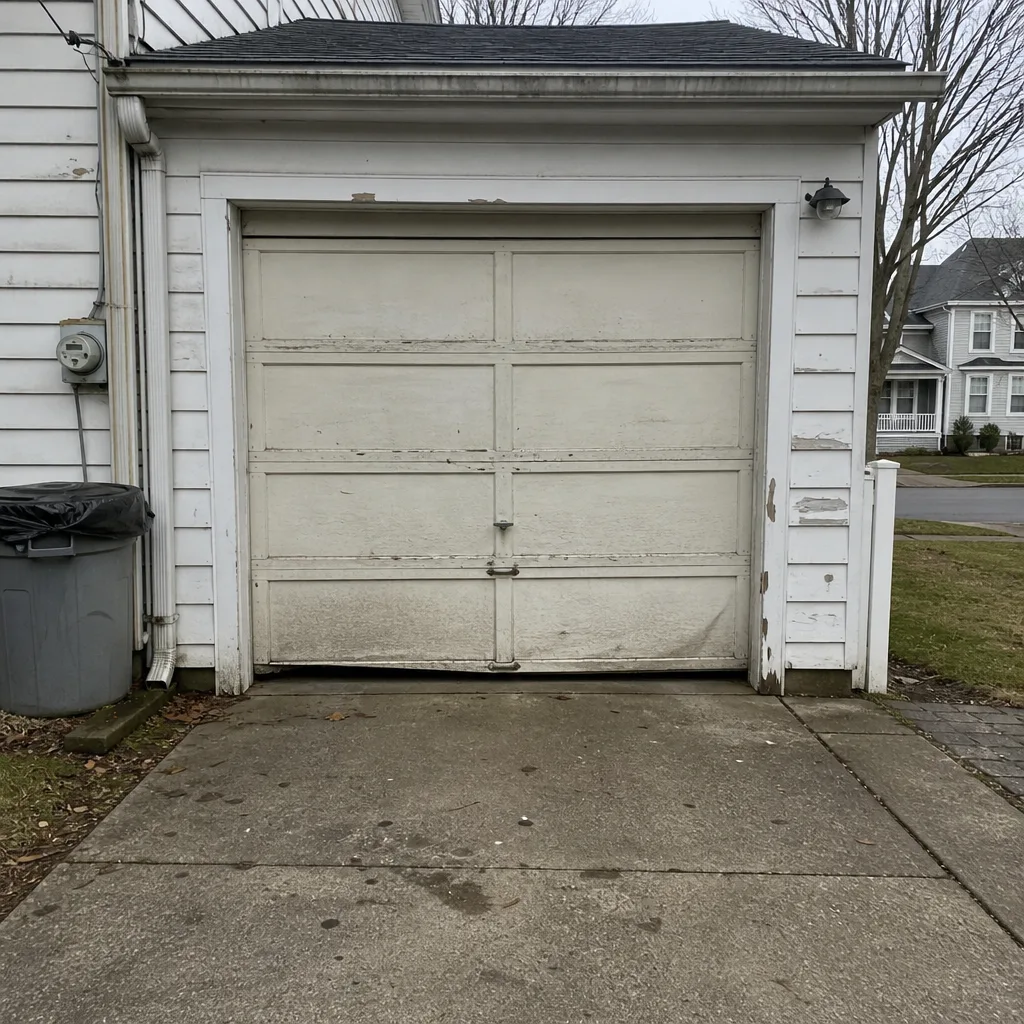 Before
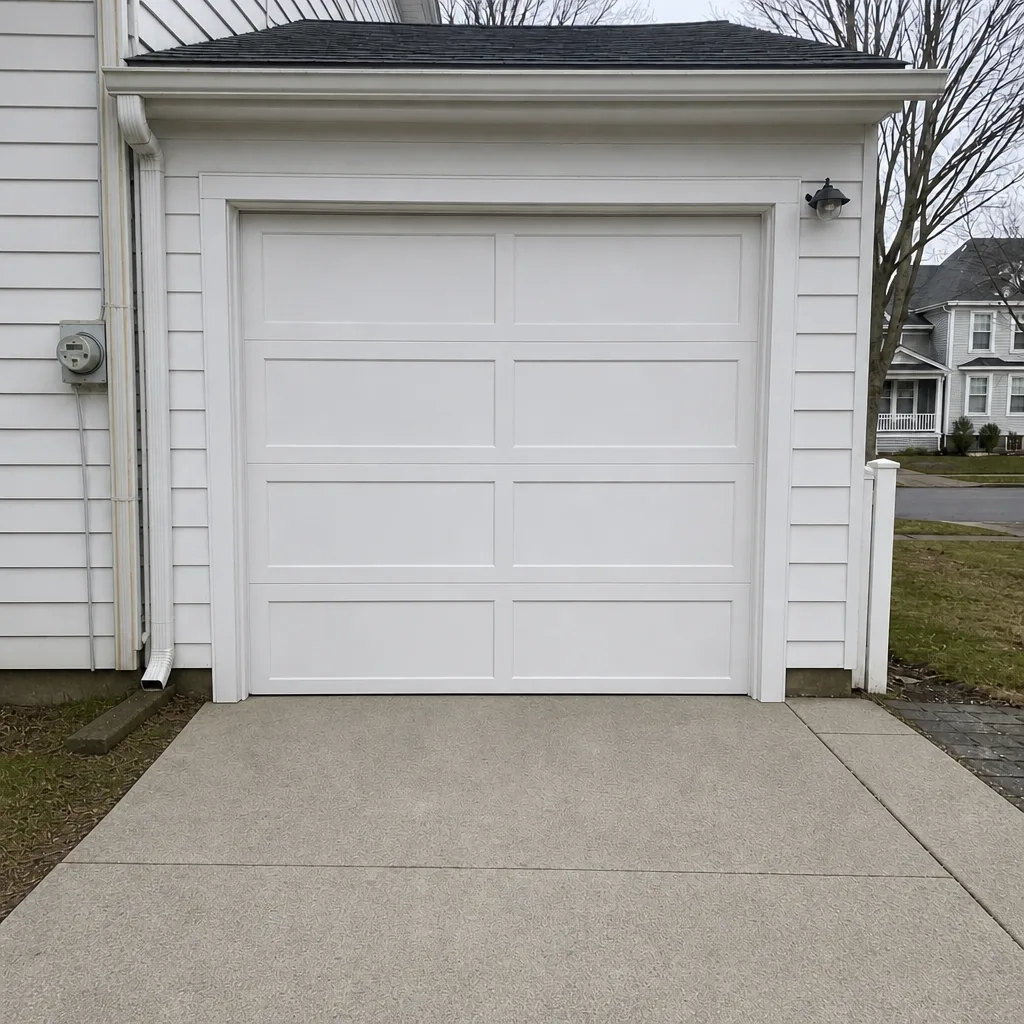 After
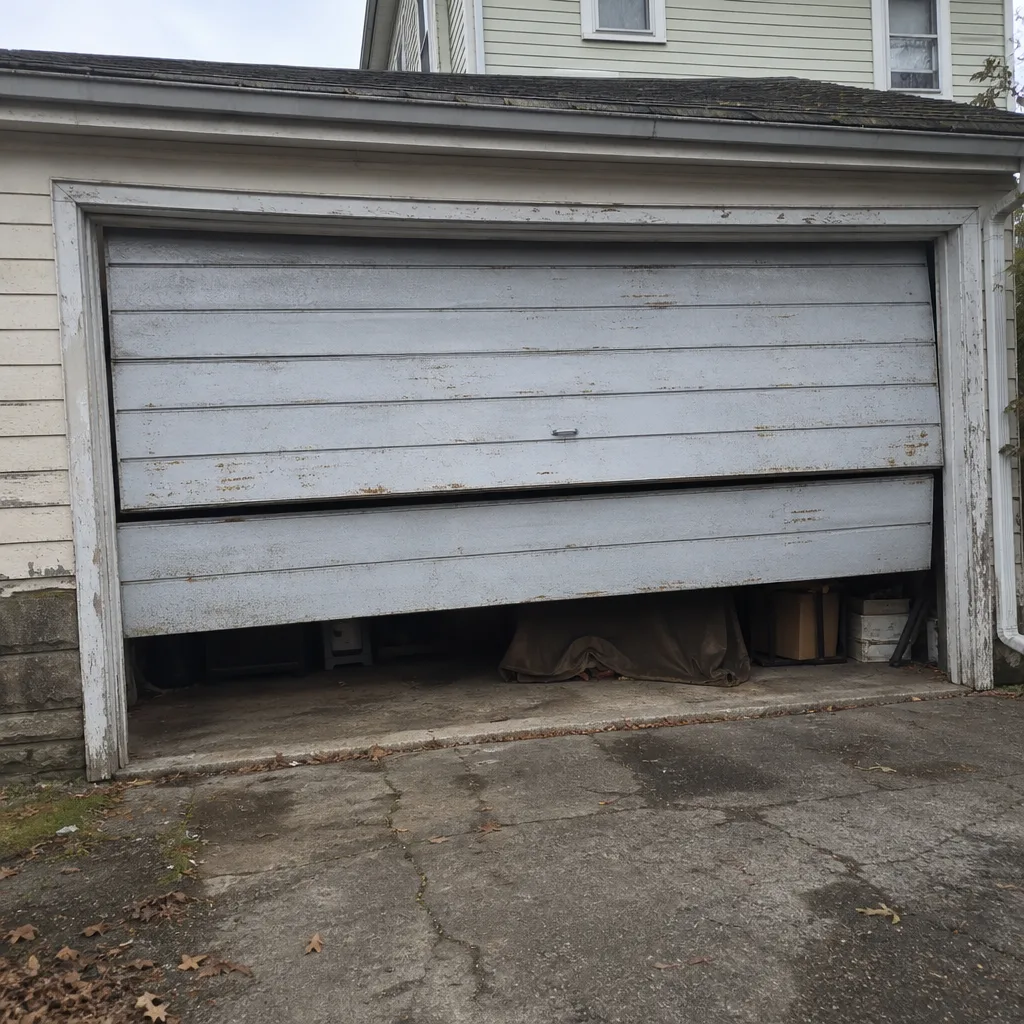 Before
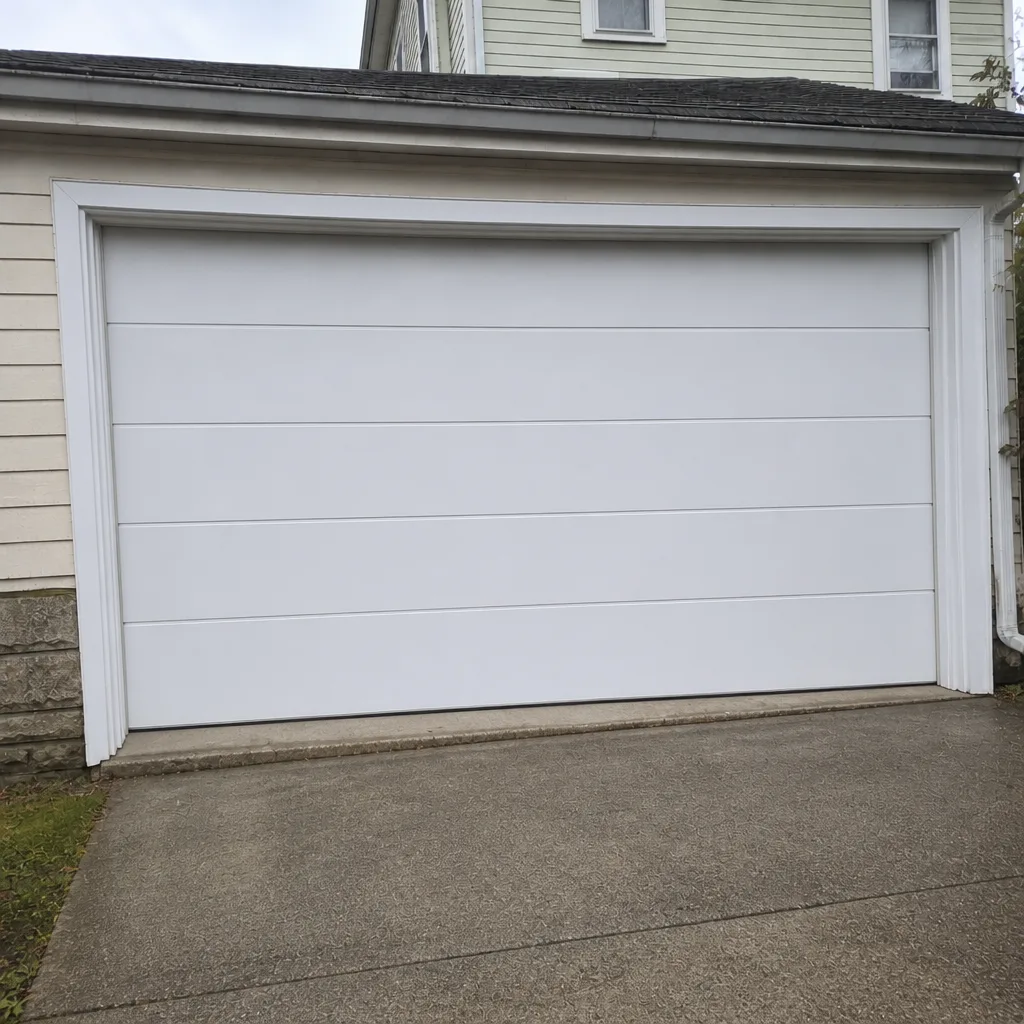 After
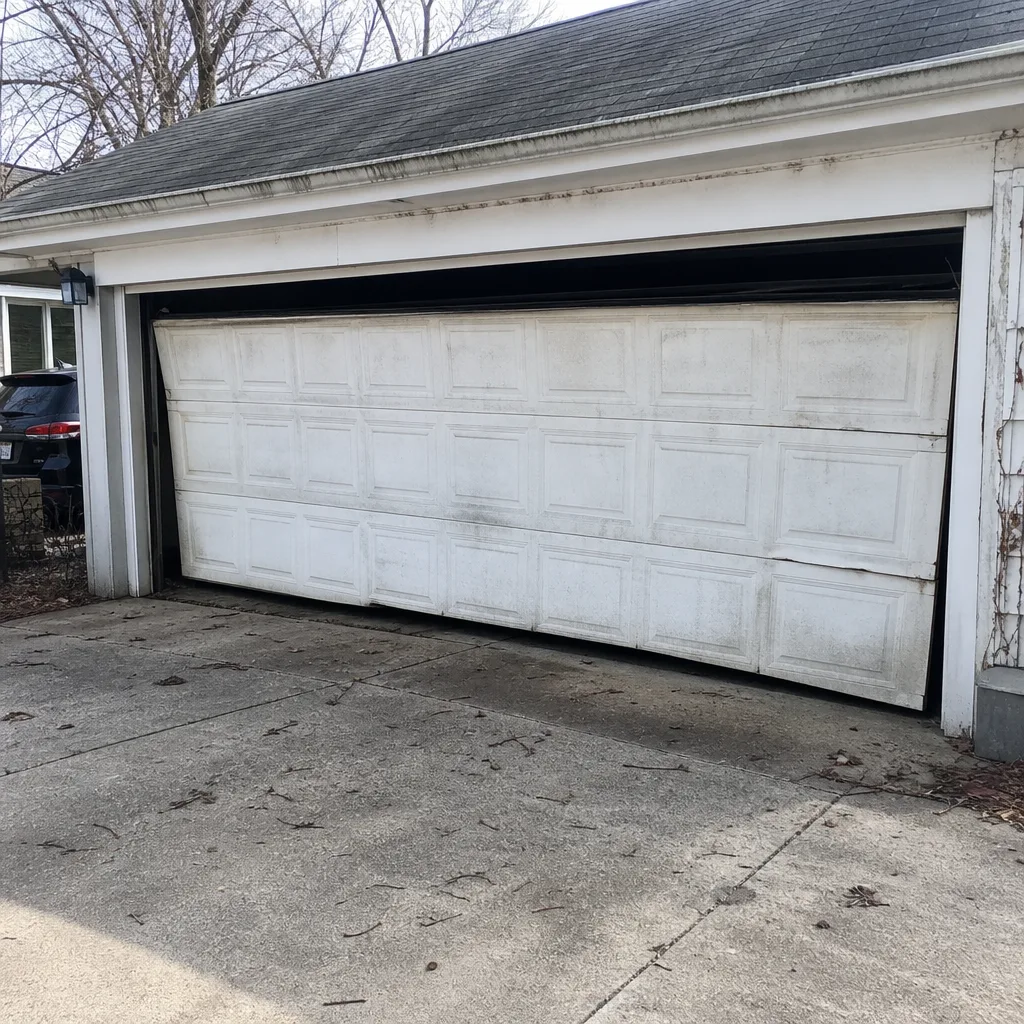 Before
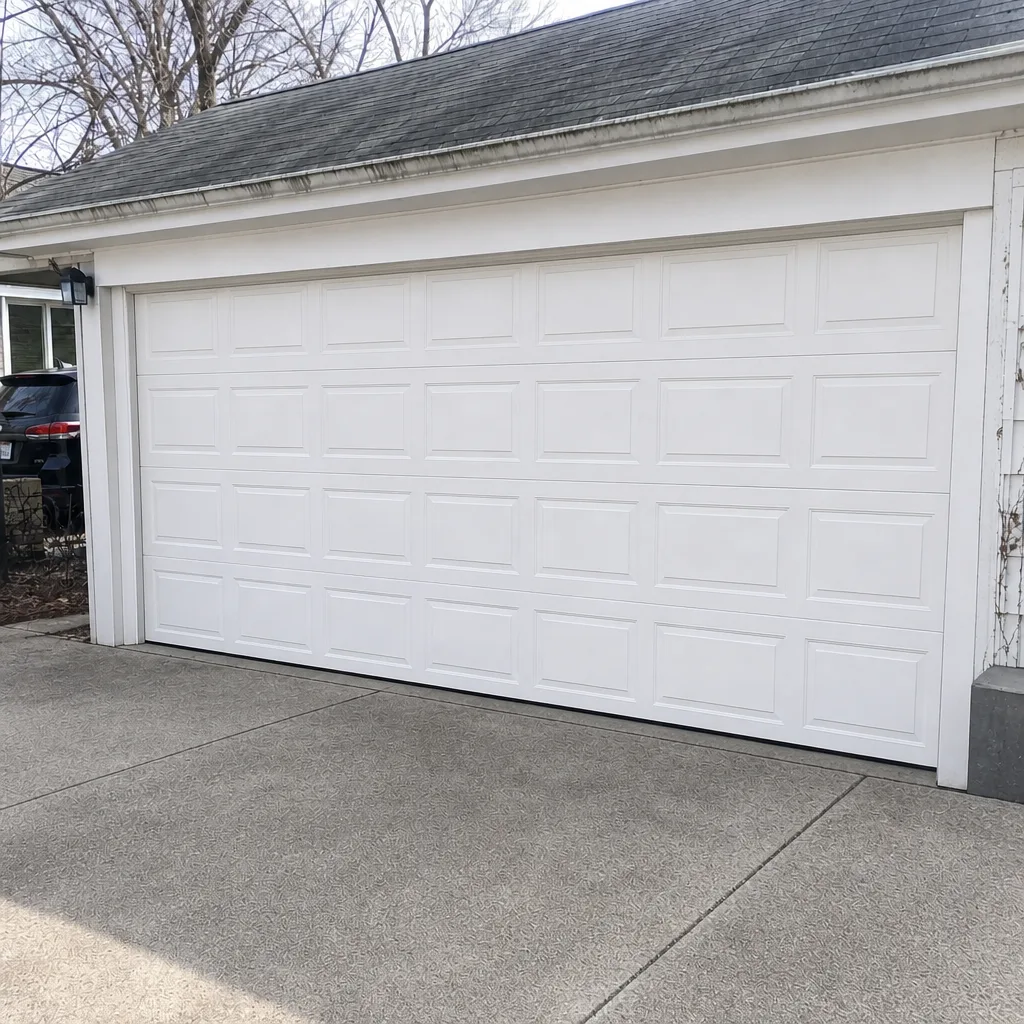 After
When to Call a Professional
Some garage door problems are cosmetic and can wait. Several can’t. Call a professional if a spring has broken or the door suddenly feels far heavier than usual, if the door has come off its tracks or is hanging unevenly, if the opener runs but the door doesn’t move, if cables are visibly frayed or slack, or if the door reverses or stops for no clear reason (a safety-system fault that needs proper diagnosis). Any of these involves stored energy or electrical systems that deserve trained hands. For springs and cables in particular, don’t attempt the repair yourself; the risk of serious injury is real.
New Haven Garage Door Repair Pros offers free estimates in New Haven, with a written price before any work starts. We answer 24/7. Fast dispatch from 7am to 7pm, Sunday through Friday, so a stuck door gets handled by someone who works on your brand. We service LiftMaster, Chamberlain, Genie, Clopay, Amarr, Wayne Dalton, Craftsman, and Raynor. Call (877) 492-2068 for an exact quote.
Frequently Asked Questions
Spring repair in New Haven typically runs $150 – $300 for a single torsion spring, or $300 – $600 for a matched pair, which is usually the right call since both springs age together. Extension spring pairs generally run $120 – $250. The written estimate you receive before work begins sets the final price. Call (877) 492-2068 for an exact quote; estimates are free.
For repair and emergency work, same-day service is often possible. We answer 24/7, and fast dispatch runs from 7am to 7pm, Sunday through Friday. A call outside dispatch hours is booked into the next opening. Call (877) 492-2068 and we’ll tell you what’s available.
No, not for the work quoted. The written estimate is agreed before any work starts, so the figure you approve is the figure for that job. If we discover something that changes the scope, such as a damaged track behind a panel, we’ll explain it and get your approval before doing anything extra. Call (877) 492-2068 to start with a free estimate.
The local professionals we connect you with are licensed and insured as their state requires. Our technicians have up to 13 years of experience, including work on spring systems, which is the most safety-critical part of the trade. Call (877) 492-2068 with any credential questions before booking.
Confirm with the city whether your address falls in a local historic district and whether review applies to garage door replacement on your property. Approval may cover style, material, and color, and custom doors generally can’t be returned, so get it in writing before ordering. New Haven’s planning or building department is the source for your specific rules.
Often just a repair. A common failure is a stripped gear, a failed logic board, a misaligned safety sensor, or a remote that needs reprogramming, and any of those can usually be fixed rather than replaced. If the opener is very old and parts aren’t available, replacement becomes the practical answer. We diagnose across LiftMaster, Chamberlain, Genie, and Craftsman systems, so the assessment starts from what’s actually failing. Call (877) 492-2068.
The Bottom Line
Choosing a garage door in New Haven starts with your house, not a catalog. Measure the header height, side clearance, and backroom before you look at styles. Confirm whether your property is in a historic district and what, if anything, the city requires before you order. Match your material to the humidity and to how the garage is used. Understand that springs are the dangerous part and deserve a specialist. And when you’re comparing companies, favor one that diagnoses across brands and handles repair, opener work, springs, and installation in one place, so that a repair problem doesn’t turn into a hunt for a second company when the door needs replacing. New Haven Garage Door Repair Pros works on all of the major brands and offers free estimates. For the full scope of what we handle, see New Haven Garage Door Repair Pros. Call (877) 492-2068 to book a free estimate. We answer 24/7. Fast dispatch from 7am to 7pm, Sunday through Friday.
Written by the team at New Haven Garage Door Repair Pros.